Air Source Heat Pump Water Heater: Complete Guide for Homes & Businesses
What is an Air Source Heat Pump Water Heater?
An air source heat pump water heater is an advanced system that uses heat from the surrounding air to heat water efficiently. Instead of generating heat directly like traditional geysers, it transfers heat, making it highly energy-efficient and cost-effective.
How Does an Air Source Heat Pump Work?
An air source heat pump works on a heat transfer cycle, using refrigerant technology to convert ambient air heat into hot water.
Step-by-Step Working Process
1. Air Absorption (Heat Collection)
The system draws in surrounding air through a fan. This air passes over an evaporator coil containing refrigerant.
- Refrigerant absorbs heat from air
- Converts from liquid to gas
- Captures free heat energy
2. Compression (Temperature Increase)
The refrigerant gas enters a compressor.
- Gas is compressed under high pressure
- Temperature increases significantly
- Becomes high-temperature gas
3. Heat Transfer (Water Heating)
The hot refrigerant passes through a condenser (heat exchanger).
- Heat transfers to water
- Water heats up quickly
- Refrigerant converts back to liquid
4. Expansion (Cycle Reset)
The refrigerant flows through an expansion valve.
- Pressure drops
- Temperature decreases
- Ready to repeat the cycle
5. Hot Water Storage
Heated water is stored in an insulated tank.
- Maintains temperature for long duration
- Provides instant hot water
- Reduces heat loss
Benefits of Air Source Heat Pump Water Heater
1. Energy Efficient
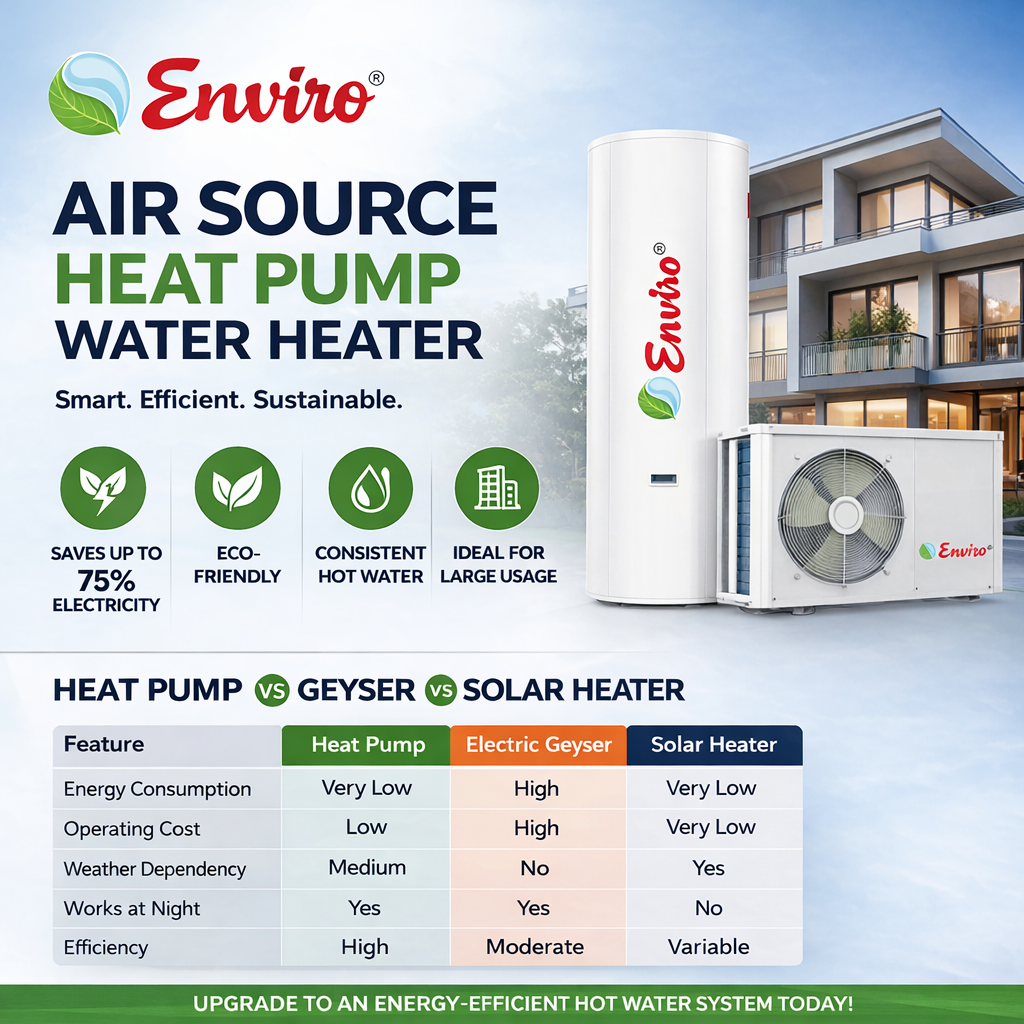
Saves up to 75% electricity compared to traditional heaters.
2. Eco-Friendly
Uses renewable heat from air and reduces carbon footprint.
3. High Performance
Provides consistent hot water in all seasons.
4. Safe Operation
No direct heating element, ensuring safety.
5. Suitable for Large Usage
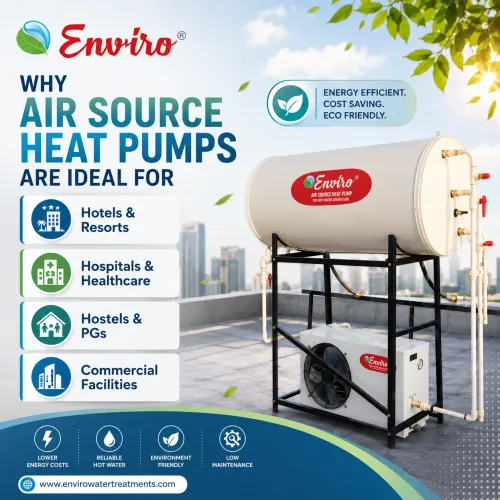
Ideal for homes, apartments, hotels, hospitals, and industries.
Applications of Air Source Heat Pump
Residential Use
- Homes
- Villas and apartments
- Daily hot water needs
Commercial Use
- Hotels and resorts
- Hospitals
- Hostels and PG accommodations
- Gyms and spas
Swimming Pool Heating
- Maintains comfortable water temperature
- Energy-efficient solution
Why Choose a Heat Pump Over a Geyser or Solar Water Heater?
Choosing the right water heating system affects electricity consumption, performance, and long-term savings.
Heat Pump vs Electric Geyser
Electric Geyser
- High electricity consumption
- Limited hot water
- Higher operating cost
Heat Pump
- Uses air heat instead of direct heating
- Saves up to 75% electricity
- Continuous hot water supply
Heat pump systems provide better efficiency and long-term cost savings compared to geysers.
Heat Pump vs Solar Water Heater
Solar Water Heater
- Depends on sunlight
- Not effective during cloudy or rainy days
- Requires large rooftop space
- Limited usage at night
Heat Pump
- Works 24/7 (day and night)
- No weather dependency
- Requires less installation space
- Provides consistent performance
Heat pumps offer more reliable performance compared to solar systems in all weather conditions.
Final Comparison Table
| Feature | Heat Pump | Electric Geyser | Solar Heater |
|---|---|---|---|
| Energy Consumption | Very Low | High | Very Low |
| Operating Cost | Low | High | Very Low |
| Weather Dependency | No | No | Yes |
| Works at Night | Yes | Yes | No |
| Efficiency | High | Moderate | Variable |
Conclusion
An air source heat pump water heater is one of the most efficient and reliable solutions for modern water heating needs. It provides energy savings, consistent hot water supply, and long-term performance.
For both residential and commercial applications, a heat pump is a smart investment for reducing electricity costs and improving efficiency.
Call Now for Heat Pump Solutions
+91 9945125656
Get expert consultation, pricing, and installation support for your requirements.