Common Contaminants in Drinking Water: Causes, Health Effects & Treatment Methods
Clean drinking water is essential for good health, but in many areas, water contains various impurities that may not be visible to the naked eye. These impurities, known as contaminants, can affect the taste, safety, and overall quality of water.
Understanding the common contaminants in drinking water, their causes, health effects, and treatment methods is important to ensure safe and healthy water for daily use.
What Are Water Contaminants?
Water contaminants are unwanted substances present in water. These can be:
- Physical impurities
- Chemical substances
- Biological organisms
They may enter water through natural sources, human activities, or aging infrastructure.
Types of Common Contaminants in Drinking Water
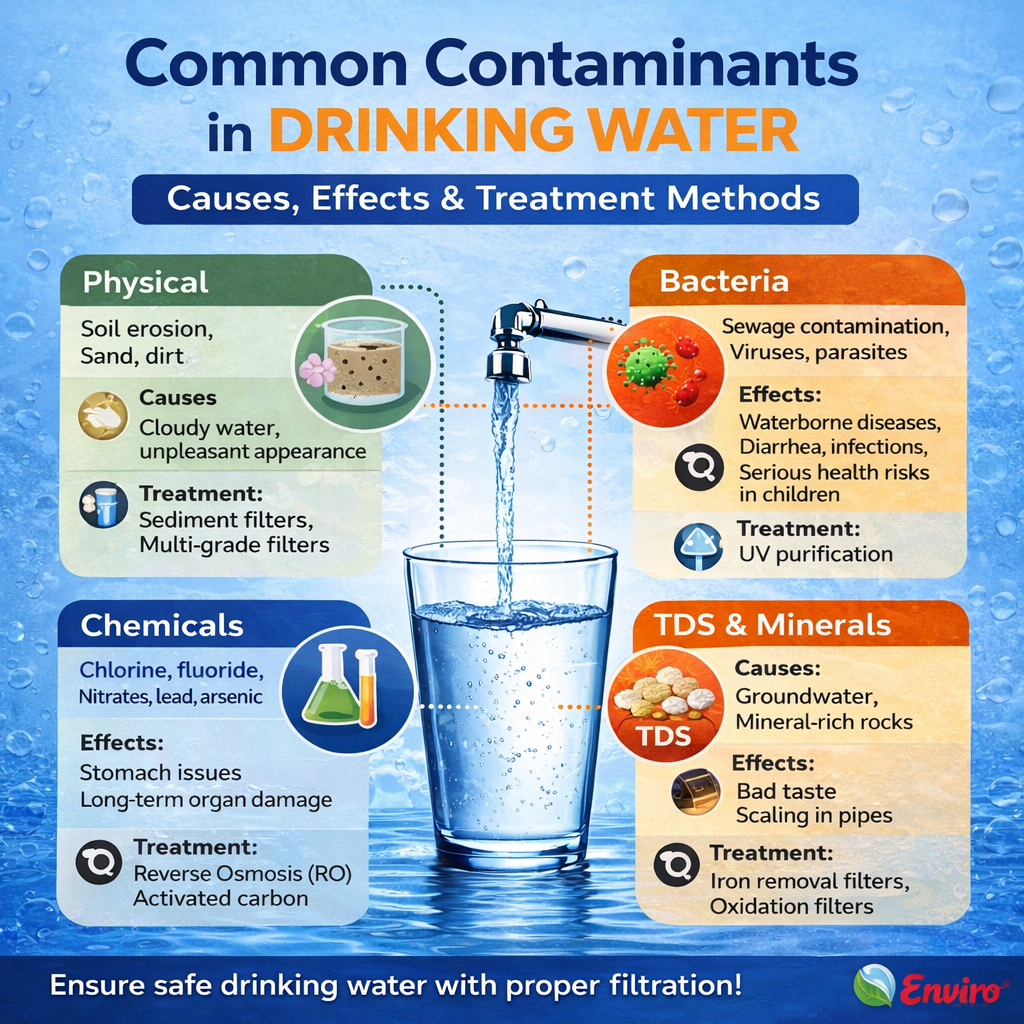
1. Physical Contaminants
These affect the appearance of water.
Examples:
- Dust and dirt
- Sand and silt
- Suspended particles
Causes:
- Soil erosion
- Poor filtration
- Pipeline disturbances
Effects:
- Cloudy water
- Unpleasant appearance
Treatment:
- Sediment filtration
- Multi-grade filters
2. Chemical Contaminants
These are dissolved substances that may be harmful.
Common Chemicals:
- Chlorine
- Fluoride
- Nitrates
- Heavy metals (lead, arsenic, mercury)
Causes:
- Industrial discharge
- Agricultural runoff
- Natural mineral deposits
Health Effects:
- Stomach issues
- Long-term organ damage
- Toxicity at high levels
Treatment Methods:
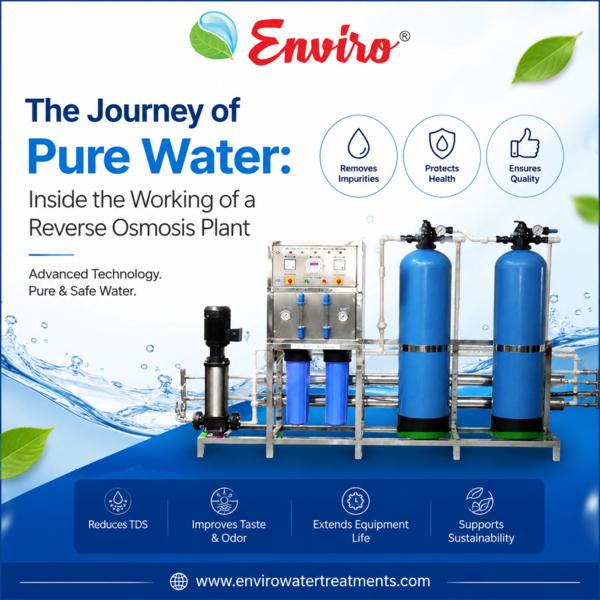
- Reverse Osmosis (RO)
- Activated carbon filters
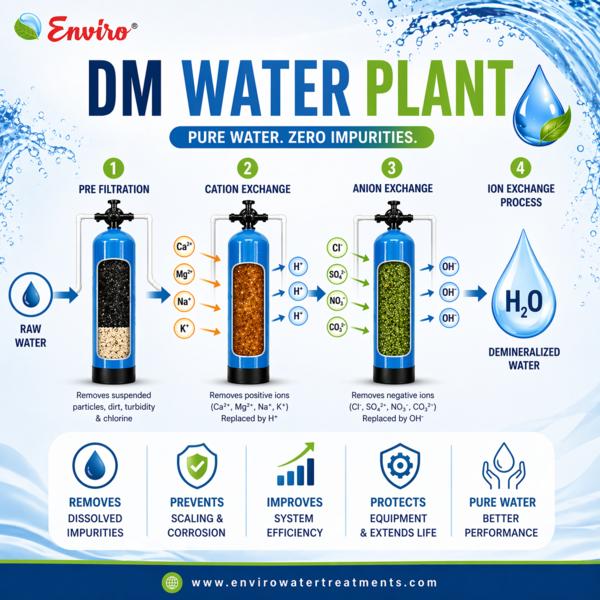
- Deionization systems
3. Biological Contaminants
These include harmful microorganisms.
Examples:
- Bacteria
- Viruses
- Parasites
Causes:
- Sewage contamination
- Poor sanitation
- Contaminated water sources
Health Effects:
- Waterborne diseases
- Diarrhea and infections
- Serious health risks in children
Treatment:
- UV purification
- Chlorination
- Ultrafiltration
4. Dissolved Solids (TDS)
Total Dissolved Solids include minerals and salts.
Common Elements:
- Calcium
- Magnesium
- Sodium
Causes:
- Groundwater sources
- Mineral-rich soil and rocks
Effects:
- Bad taste
- Scaling in pipes and appliances
Treatment:
- RO systems
- Water softeners
5. Iron and Manganese
These are common in borewell water.
Effects:
- Reddish or brown stains
- Metallic taste
- Laundry staining
Treatment:
- Iron removal filters
- Oxidation systems
Causes of Water Contamination
- Industrial waste discharge
- Agricultural chemicals and fertilizers
- Leakage in pipelines
- Poor water storage conditions
- Natural geological conditions
Health Effects of Contaminated Water
Drinking contaminated water can lead to:
- Digestive issues
- Skin problems
- Hair damage
- Long-term health complications
- Waterborne diseases
How to Identify Contaminated Water
You may notice:
- Bad smell or taste
- Cloudy or colored water
- Stains on utensils or fixtures
- Skin irritation after use
Testing water using a water testing kit or TDS meter is recommended.
Best Treatment Methods for Safe Drinking Water
1. Reverse Osmosis (RO)
Removes dissolved salts, heavy metals, and chemicals.
2. UV Purification
Kills bacteria and viruses.
3. Water Softener
Removes hardness caused by calcium and magnesium.
4. Activated Carbon Filtration
Removes chlorine, odor, and organic impurities.
5. Iron Removal Systems
Eliminates iron and improves water clarity.
6. Multi-Stage Filtration Systems
Combines multiple technologies for complete purification.
Why Water Treatment is Important
- Ensures safe drinking water
- Protects health
- Improves taste and quality
- Extends appliance life
- Prevents long-term damage
Conclusion
Water contaminants are a common issue, especially in areas using groundwater or untreated sources. Identifying the type of contaminants and choosing the right treatment method is essential for ensuring safe and healthy water.
Using proper water treatment systems like RO, UV, softeners, and filtration units can effectively remove contaminants and improve water quality for everyday use.