Distribution System, In Water Supply
Key Functions
Carry treated water safely to all users
-
Maintain adequate pressure and flow
-
Ensure continuous and reliable water supply
-
Preserve water quality during transport
Main Components
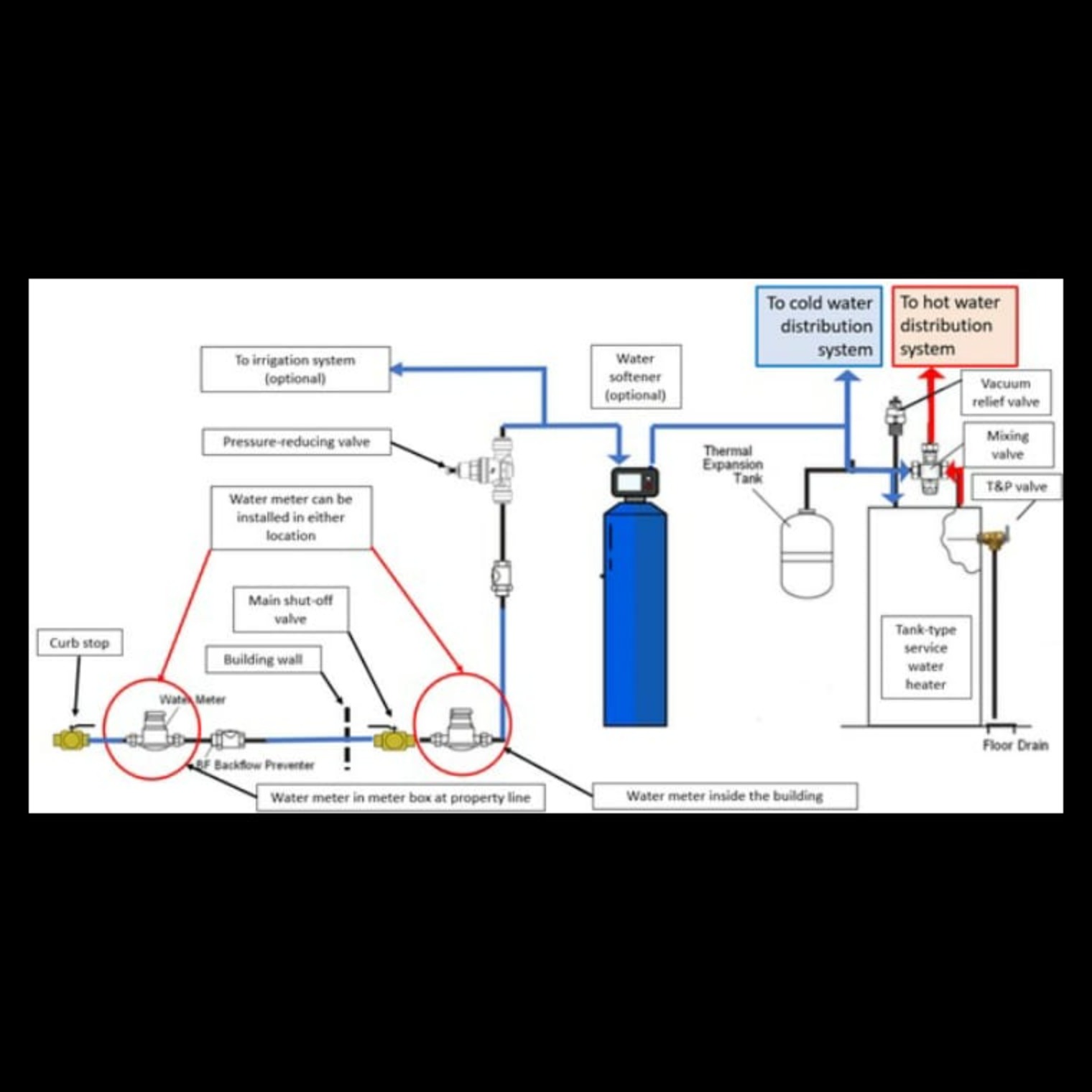
Pipelines – Carry water to different areas
-
Pumps – Boost water pressure and flow
-
Storage Tanks/Reservoirs – Store water for peak demand and emergencies
-
Valves – Control flow and isolate sections for maintenance
-
Meters – Measure water usage
Types of Distribution Systems
1. Dead-End System
Key Features of Dead-End System
Simple and easy to design
-
Low initial cost
-
Easy to extend
Main Drawbacks
Poor water circulation
-
Stagnation of water at dead ends
-
Higher chances of contamination
-
Unequal pressure at far ends
2. Grid Iron System
Key Features of Grid iron System
Good water circulation
-
Uniform pressure distribution
-
Less chance of stagnation
-
Reliable supply during repairs (alternate paths available)
Main Drawbacks
Higher initial cost
-
More valves required
-
Complex design and maintenance
3. Ring (Circular) System
Key Features of Ring (Circular) System
Good water circulation
-
Uniform pressure at all points
-
No dead ends in the main
-
Reliable supply during pipe repairs
Main Drawbacks
Higher cost than dead-end system
-
More valves and fittings required
4. Radial System
Key Features of Radial System
Easy control and management of supply
-
Uniform pressure in each zone
-
Quick detection of leakage
-
Suitable for large cities and planned areas
Main Drawbacks
High initial cost
-
Complex design
-
Requires skilled operation