Karnataka drinking water crisis: Bengaluru South worst-hit; 210 villages living on tankers
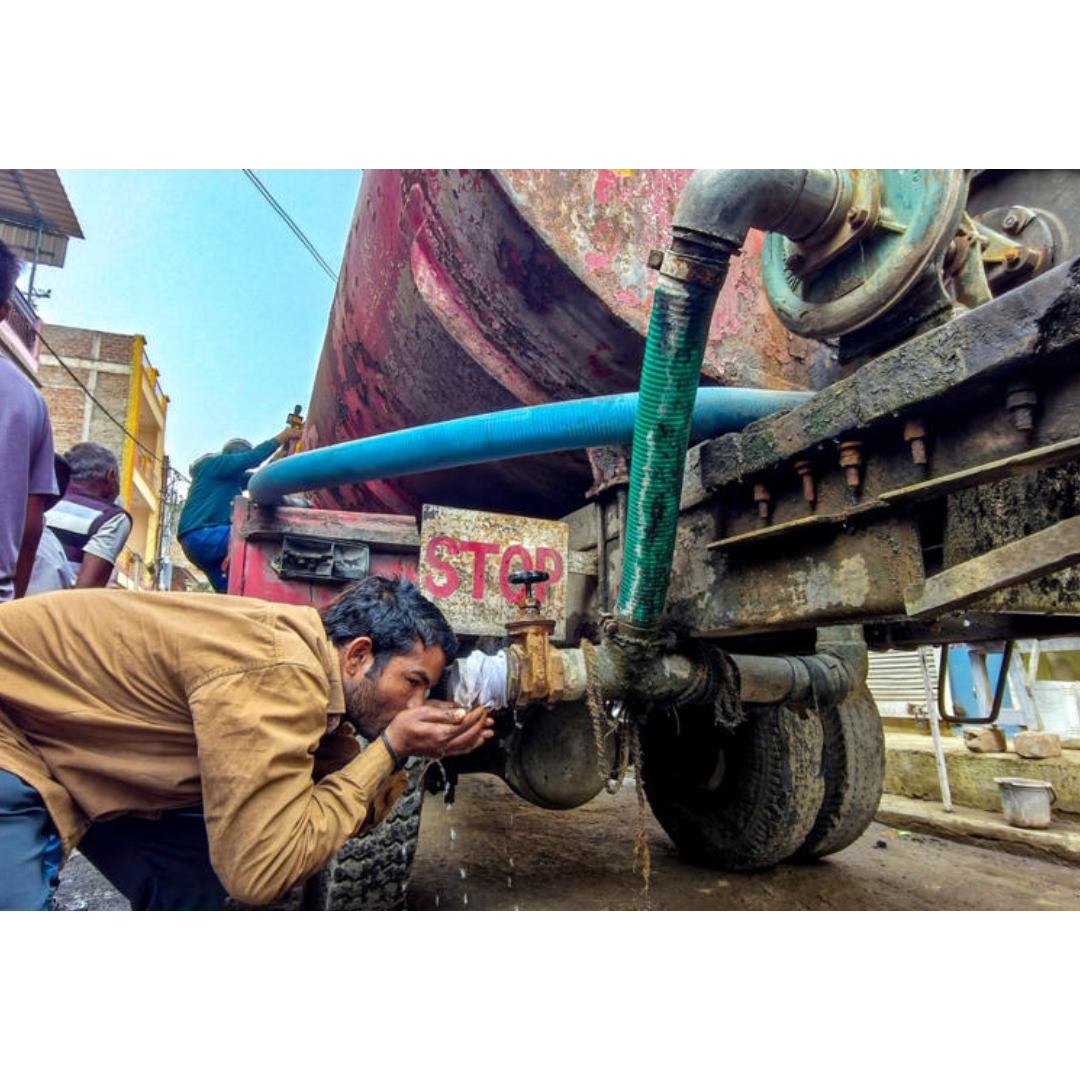
Karnataka is just barely in the middle of its summer season but seems to be struggling to get over the hump, with several districts severely water-stressed. According to reports, the state is staring at a worsening drinking water problem, with Bengaluru South (Ramanagar) emerging as the worst-hit region where as many as 210 villages are now dependent on tanker supply.
Overall, 344 villages across 58 taluks are reportedly facing drinking water shortages, with several districts in north Karnataka and the Bengaluru rural belt also reporting severe stress.
According to a report in The Times of India, official data shows that alongside tanker dependence, 125 villages are relying on private borewells, pointing to increasing pressure on groundwater sources amid falling water tables.
Bengaluru South takes an unenviable lead with 55 affected villages, followed by Raichur (41), Uttara Kannada (27) and Tumakuru (26). The spread highlights both uneven rainfall patterns and rising demand in rural and peri-urban pockets.
In Uttara Kannada, officials flagged terrain and depletion of water sources as key challenges. Areas such as Haliyal and Mundgod have been particularly affected, requiring authorities to deploy tankers and hire private borewells under multi-village supply schemes. In coastal Kumta, poor borewell water quality has further forced reliance on tanker supply.
Some districts, however, have reportedly managed to avoid shortages so far, thanks to better infrastructure and drought preparedness, with 11 districts reporting no immediate crisis.
In Yadgir, local authorities have turned to infrastructure fixes, including a 4-km pipeline project costing Rs 65 lakh, supplemented by rented borewells to ensure supply during summer months.
Funding constraints, however, remain a concern.
Of the Rs 60 crore allocated for emergency drinking water works for 2025-26, only Rs 43.7 crore has been released so far. Against a total requirement of Rs 132.2 crore, disbursements stand at Rs 91.5 crore.
State officials said efforts are ongoing to ensure equitable access to safe drinking water, while IT/BT and Rural Development Minister Priyank Kharge has directed officials to respond swiftly to public complaints and maintain taluk-level helplines.