Ultrafiltration (UF)
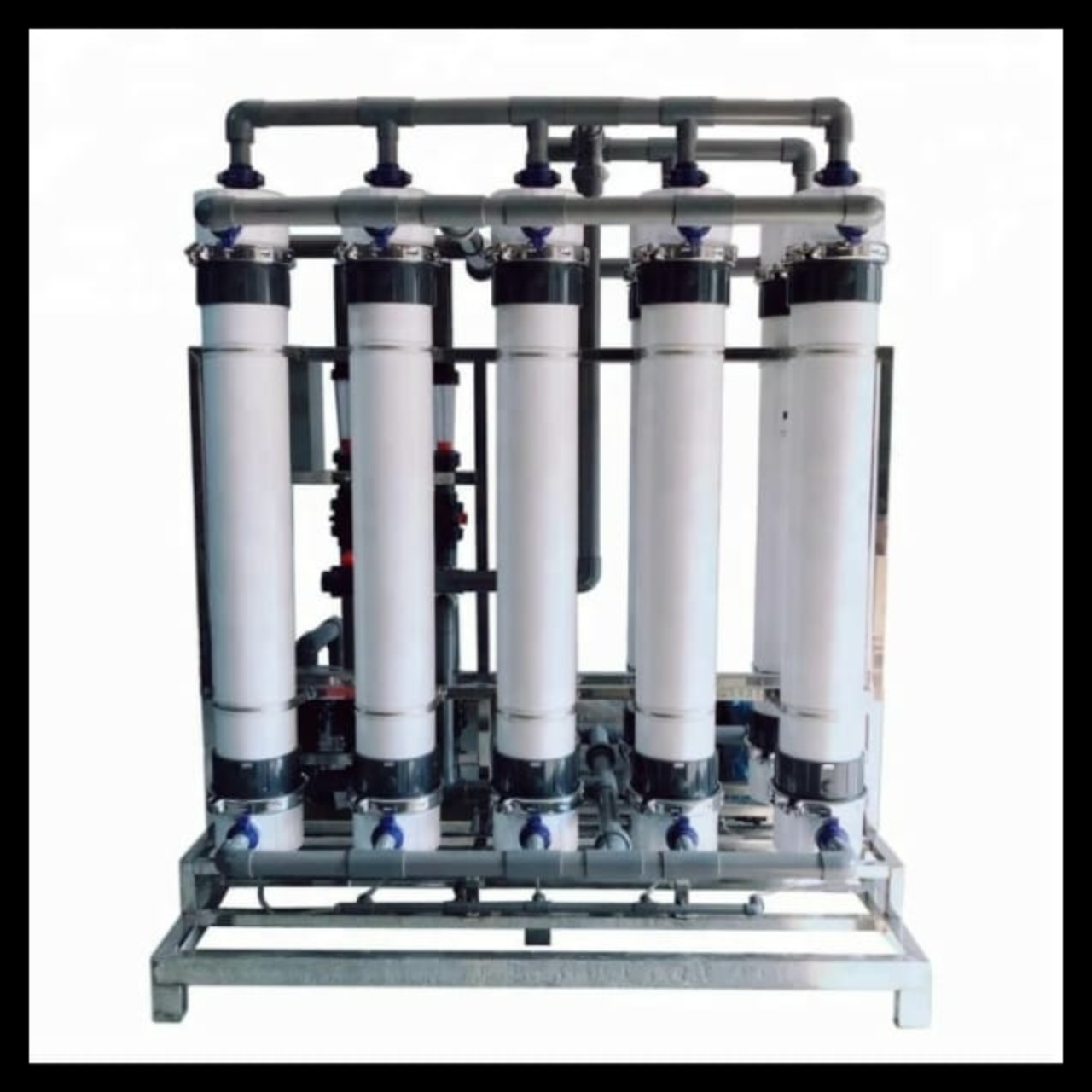
A type of membrane filtration known as ultrafiltration (UF) uses pressure or concentration gradients to separate materials via a semipermeable membrane. While water and low molecular weight solutes flow through the membrane in the permeate (filtrate), suspended particles and high molecular weight solutes are held in the so-called retentive. In both industry and research, this separation technique is employed to concentrate and purify macromolecular (103–106 Da) solutions, particularly protein solutions. Microfiltration and ultrafiltration are not essentially different. These two split according to particle capture or size exclusion. Membrane gas separation, which separates based on varying rates of diffusion and absorption, is essentially different from it. The membrane's molecular weight cut-off (MWCO) defines ultrafiltration membranes. Ultrafiltration can be used in either dead-end or cross-flow mode .Particulates and macromolecules can be eliminated from raw water using ultrafiltration to provide drinkable water. Existing secondary (coagulation, flocculation, sedimentation) and tertiary (sand filtration and chlorination) filtration systems have either been replaced by it. utilized as independent systems in remote areas with expanding populations or in water treatment facilities. Utilizing primary (screening, flotation, and filtration) and some secondary treatments as pre-treatment steps, UF is frequently incorporated into the process when treating water with heavy suspended particles.
UF processes are currently preferred over traditional treatment methods
Chemicals are not needed (save for cleaning).
Regardless of feed quality, consistent product quality
Small plant size
ability to surpass legal water quality requirements and remove 90–100% of pathogens
Regardless of feed quality, consistent product quality
Small plant size
ability to surpass legal water quality requirements and remove 90–100% of pathogens
The high expense of membrane fouling and repair now limits UF operations. To avoid causing too much harm to the membrane units, more pre-treatment of the feed water is necessary.
Reverse osmosis (RO) plants frequently use UF for pre-filtration in order to safeguard the RO membranes.
The dairy sector makes substantial use of UF, especially when processing cheese whey to produce lactose-rich permeate and whey protein concentrate (WPC). A UF technique can concentrate the whey 10–30 times the feed in a single step. Initially, steam heating followed by drum drying or spray drying was used as an alternative to membrane filtration of whey. Because of its insolubility and granular texture, the output of these techniques had few uses. Additionally, existing technologies had high capital and operating expenses, uneven product composition, and frequently denatured certain proteins due to the extreme heat utilized during drying.
In contrast to conventional techniques, the UF procedures utilized for this application:
are more energy-efficient
maintain a constant level of product quality, with 35–80% protein depending on the circumstances of operation.
are more energy-efficient
maintain a constant level of product quality, with 35–80% protein depending on the circumstances of operation.
Proteins require moderate functioning conditions, therefore avoid denatured proteins.
Fouling is a common topic of discussion and has been found to be a major factor in productivity decline. Scale deposits on the membrane surface may result from the high calcium phosphate concentrations found in cheese whey. In order to preserve the solubility of calcium salts, a significant pre-treatment must be used to balance the feed's pH and temperature.
It is possible to mount a selectively permeable membrane in a centrifuge tube. Centrifugation pushes the buffer through the membrane, leaving the protein in the top chamber.
Fouling is a common topic of discussion and has been found to be a major factor in productivity decline. Scale deposits on the membrane surface may result from the high calcium phosphate concentrations found in cheese whey. In order to preserve the solubility of calcium salts, a significant pre-treatment must be used to balance the feed's pH and temperature.
It is possible to mount a selectively permeable membrane in a centrifuge tube. Centrifugation pushes the buffer through the membrane, leaving the protein in the top chamber.