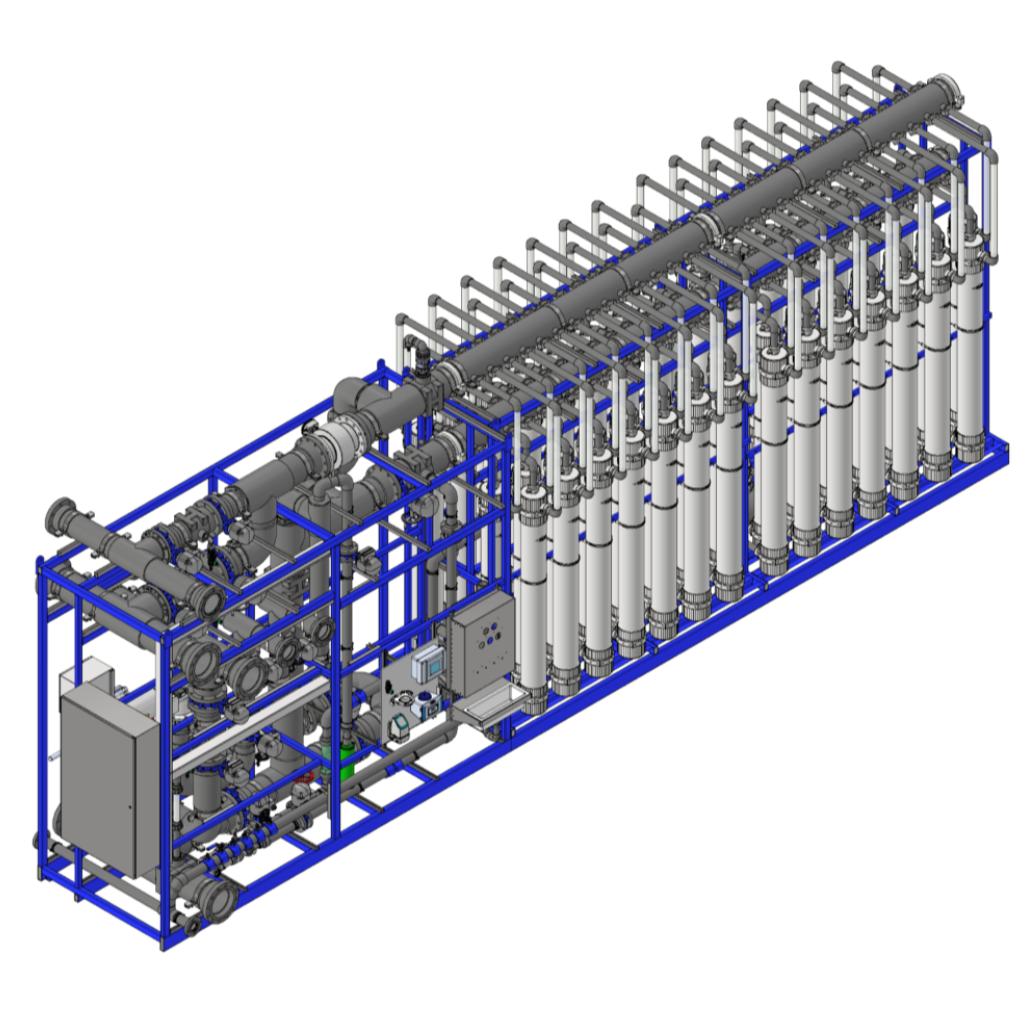
Ultrafiltration (UF)
What Ultrafiltration Removes
Suspended solids
-
Turbidity
-
Bacteria and viruses
-
Algae and colloidal particles
How It Works
Raw water is fed to the UF membrane
-
Pressure pushes water through the membrane
-
Impurities are retained on the membrane surface
-
Clean water (permeate) is collected
Where Ultrafiltration Is Used
Drinking water treatment
-
Industrial water treatment
-
Pretreatment for RO plants
-
Effluent & sewage treatment plants
How Ultrafiltration Works
Water is passed through a semi-permeable membrane
-
Membrane pore size: 0.01–0.1 microns
-
Pressure-driven process (lower pressure than RO)
-
Clean water passes through; contaminants are retained and flushed
What UF Removes
- Suspended solids
- Turbidity
- Bacteria & viruses
- Algae & colloids
- Proteins & organic matter
Types of UF Systems
Hollow fiber membranes
-
Capillary membranes
-
Flat sheet membranes
-
Tubular membranes
Applications of Ultrafiltration
Drinking water treatment
-
Industrial water treatment
-
Pretreatment for RO systems
-
Food & beverage industry
-
Pharmaceutical industry
-
Wastewater & ETP/STP polishing
Advantages of Ultrafiltration
High-quality filtered water
-
No chemicals required
-
Low operating pressure
-
Protects RO membranes
-
Compact and easy to operate