What is a Water Softener and How It Works
Hard water is a common problem in many homes, especially in areas using borewell water. It contains high levels of calcium and magnesium, which can cause scaling, reduce appliance efficiency, and affect skin and hair.
Understanding what is a water softener and how it works helps you choose the right solution to improve water quality in your home or business.
What is a Water Softener?
A water softener is a water treatment system designed to remove hardness-causing minerals such as calcium and magnesium from water.
It converts hard water into soft water, making it suitable for daily use like bathing, washing, and cleaning.
What is Hard Water?
Hard water contains high concentrations of:
- Calcium (Ca²⁺)
- Magnesium (Mg²⁺)
These minerals cause:
- Scale formation in pipes
- Reduced soap efficiency
- Dry skin and hair problems
How Does a Water Softener Work?
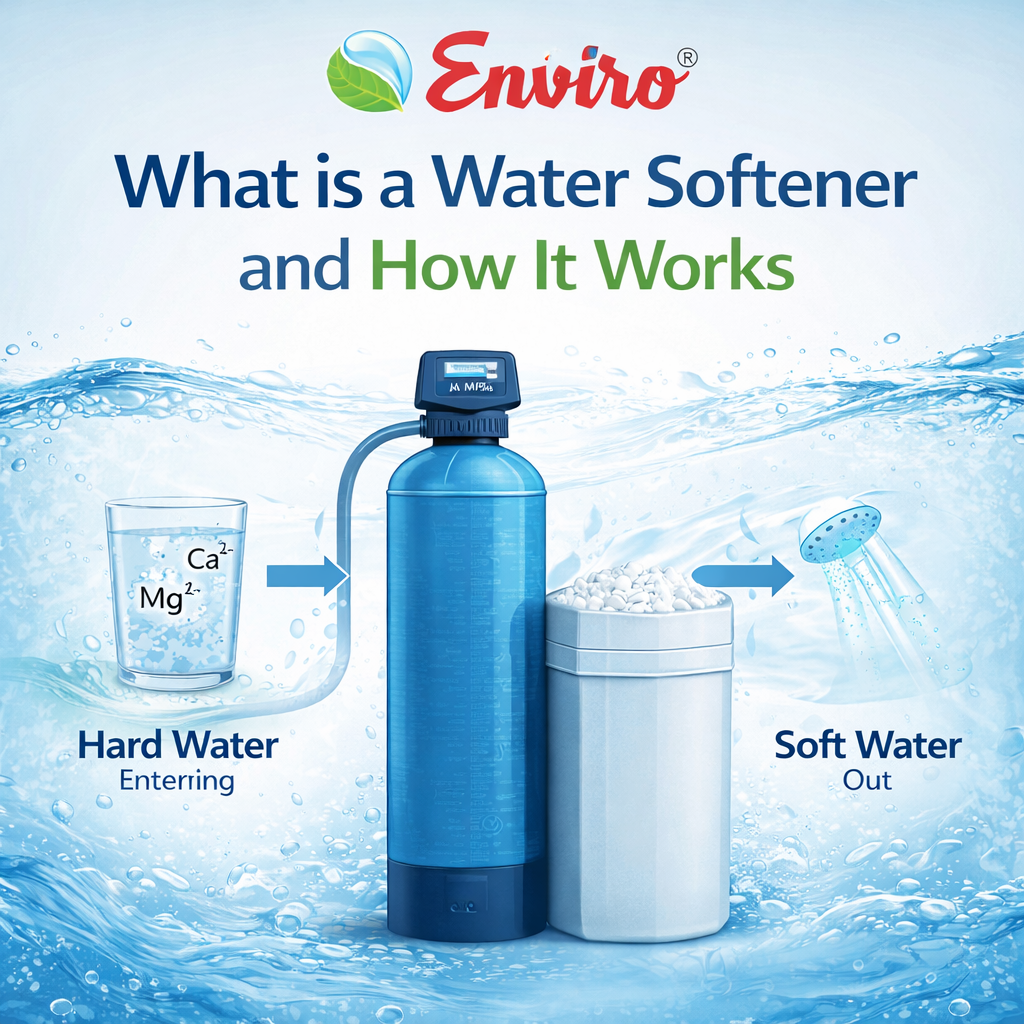
A water softener works on the ion exchange process.
Step-by-Step Working Process
1. Hard Water Enters the System
Water flows into the softener tank filled with resin beads.
2. Ion Exchange Process
Resin beads are charged with sodium ions.
They attract and replace calcium and magnesium ions present in hard water.
3. Soft Water Output
After removing hardness, softened water is supplied for use.
4. Regeneration Process
After some time, resin beads get saturated with hardness minerals.
A salt (brine) solution is used to clean and recharge the resin.
Components of a Water Softener
- Resin Tank
- Brine Tank
- Control Valve
- Resin Beads
Benefits of Using a Water Softener
- Prevents scaling in pipes and appliances
- Improves soap and detergent efficiency
- Enhances skin and hair quality
- Increases lifespan of appliances
- Reduces maintenance costs
Applications of Water Softener
- Homes and apartments
- Hotels and hospitals
- Laundry and washing units
- Industrial water treatment systems
Signs You Need a Water Softener
- White scale deposits on taps and tiles
- Soap not forming lather properly
- Dry skin and rough hair
- Reduced efficiency of geysers and appliances
Water Softener vs RO System
- Water softener removes hardness minerals
- RO system removes dissolved salts and TDS
👉 Both systems serve different purposes and can be used together.
Maintenance of Water Softener
- Regular salt refilling
- Periodic cleaning of resin tank
- System check for proper functioning
Conclusion
A water softener is an essential solution for treating hard water. By removing calcium and magnesium, it improves water quality, protects appliances, and enhances daily comfort.
Installing a water softener is a smart investment for long-term savings and better living.
Call to Action
Need a water softener for your home or business?
Call Now: +91 9945125656
Get expert consultation and customized water treatment solutions.