What is Water Hardness? Causes, Effects on Health & Hair, and Best Treatment Solutions
Water is essential for daily life, but not all water is the same. One of the most common water quality issues faced in homes and industries is water hardness. Many people experience problems like scale formation, dry skin, and hair fall without realizing that hard water is the main cause.
Understanding water hardness, its causes, effects, and treatment methods can help you improve water quality and protect your health, appliances, and plumbing systems.
What is Water Hardness?
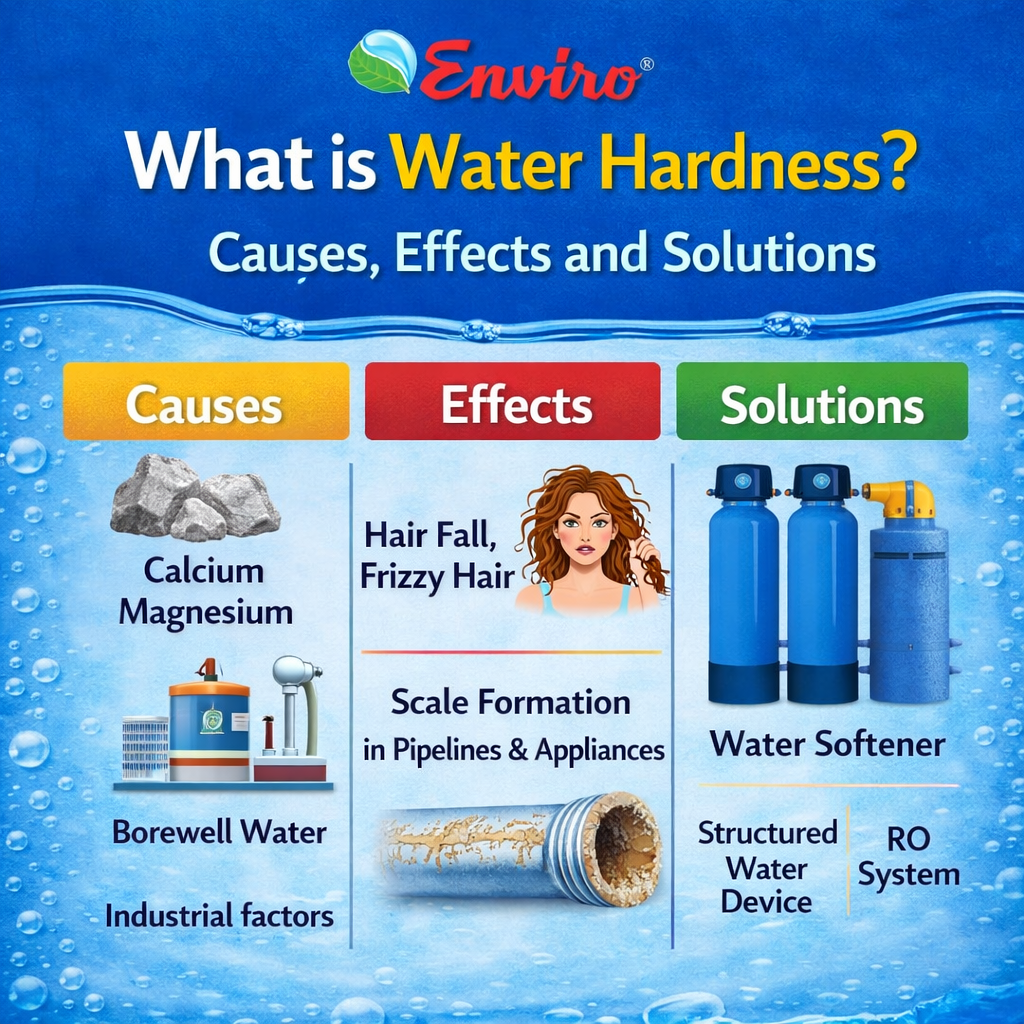
Water hardness refers to the presence of dissolved minerals, mainly calcium (Ca) and magnesium (Mg), in water.
When water passes through soil and rocks, it dissolves these minerals, making the water “hard.” The higher the concentration of these minerals, the harder the water becomes.
Water hardness is usually measured in:
- ppm (parts per million)
- mg/L (milligrams per liter)
Types of Water Hardness
1. Temporary Hardness
Caused by bicarbonates of calcium and magnesium.
It can be removed by boiling water.
2. Permanent Hardness
Caused by sulfates and chlorides of calcium and magnesium.
It cannot be removed by boiling and requires proper treatment.
Causes of Water Hardness
1. Natural Geological Sources
Water flowing through limestone, chalk, and gypsum rocks absorbs minerals.
2. Groundwater (Borewell Water)
Borewell water often has high hardness due to prolonged contact with minerals.
3. Agricultural Runoff
Fertilizers and chemicals can increase dissolved solids in water.
4. Industrial Discharge
Industrial waste may introduce additional minerals and salts into water sources.
Effects of Hard Water
1. Effects on Health
Hard water is generally safe to drink but may cause:
- Dry skin
- Skin irritation
- Reduced soap effectiveness
2. Effects on Hair
- Hair becomes dry and frizzy
- Leads to hair fall and thinning
- Causes dandruff and scalp irritation
- Reduces shine and smoothness
3. Effects on Appliances
- Scale buildup in pipes and plumbing
- Reduced efficiency of water heaters and geysers
- Damage to washing machines and dishwashers
4. Effects on Cleaning
- Soap does not lather properly
- Leaves white stains on tiles and utensils
- Increases detergent usage
How to Identify Hard Water
You may have hard water if you notice:
- White deposits on taps and showerheads
- Soap not lathering easily
- Dry skin after bathing
- Hair becoming rough and dull
- Scale formation in kettles or heaters
How to Treat Hard Water
1. Water Softener (Best Solution)
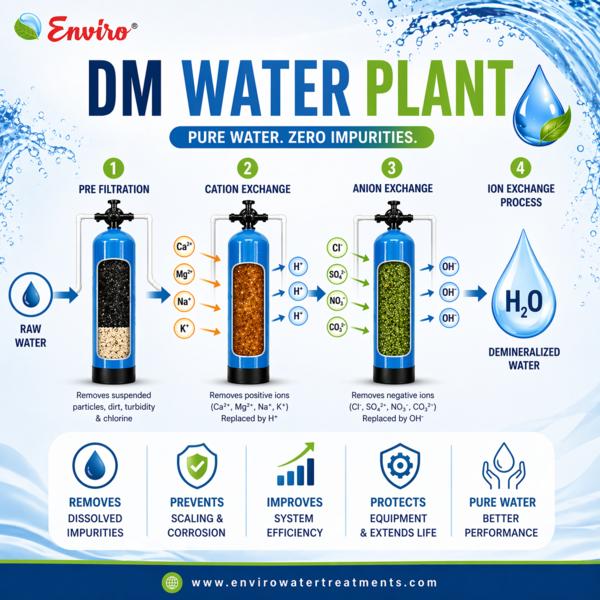
A water softener uses the ion exchange process to replace calcium and magnesium ions with sodium ions.
Benefits:
- Removes hardness effectively
- Improves water quality
- Protects plumbing and appliances
2. Reverse Osmosis (RO) System
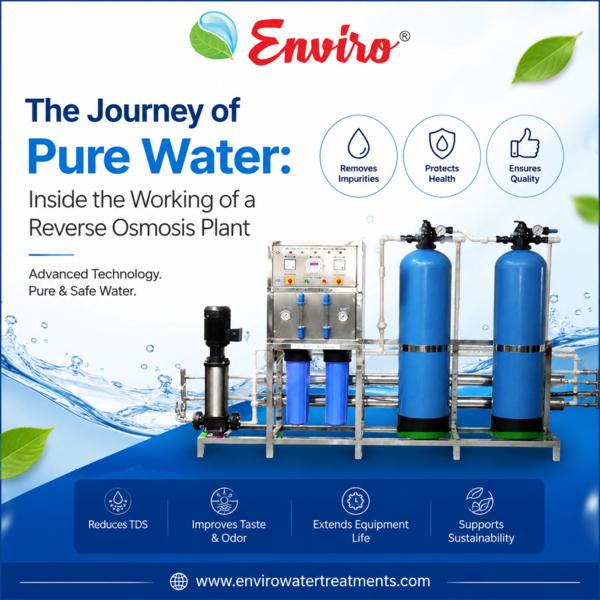
RO systems remove dissolved minerals and reduce hardness.
Best for:
- Drinking water
- Kitchen use
3. Structured Water Device
A structured water device is a modern, chemical-free solution that changes the physical structure of water molecules.
Instead of removing minerals, it modifies their behavior to reduce scaling.
Benefits:
- Reduces scale buildup in pipes and appliances
- Improves water flow and efficiency
- Eco-friendly (no salt or chemicals required)
- Low maintenance
4. Magnetic / Electronic Descalers
These devices reduce scale formation but do not completely remove hardness.
5. Boiling (For Temporary Hardness Only)
Boiling removes temporary hardness but is not practical for daily or large-scale use.
6. Chemical Treatment (Industrial Use)
Used in industries for boilers and cooling systems to control hardness and prevent scaling.
Conclusion
Water hardness is a common issue caused by dissolved minerals like calcium and magnesium. While it is not harmful for drinking, it can affect hair, skin, appliances, and daily activities.
Using solutions like water softeners, RO systems, and structured water devices can help reduce the effects of hard water and improve overall water quality.