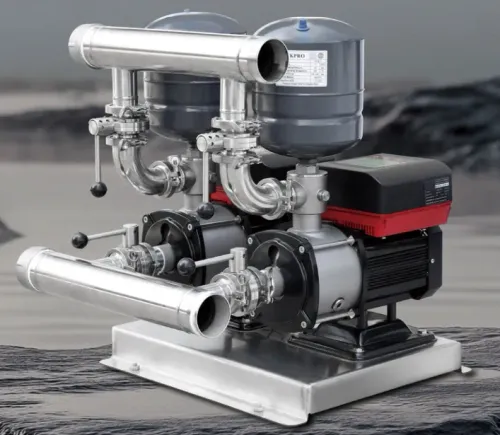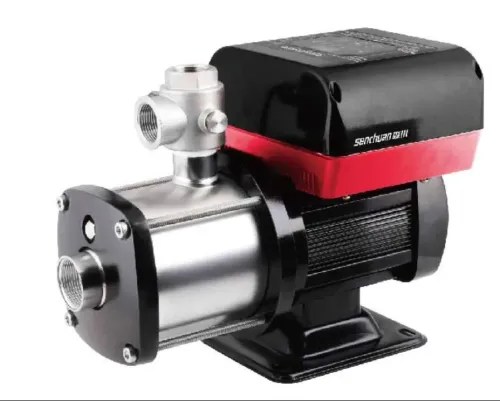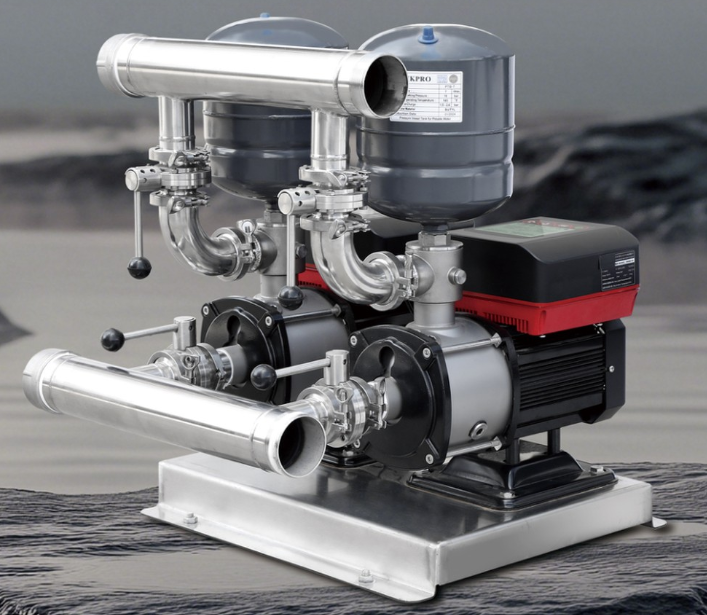
Why VFD Booster Pumps Save Energy Compared to Traditional Pumps
Primary Keyword: VFD Booster Pump
Secondary Keywords: Energy-efficient water pump, Variable speed pump, Pressure booster pump, Reduce electricity bill
Structure
Introduction
Many homeowners and facility managers focus on the purchase price of a water pump, but the real cost comes from years of electricity consumption. A pump that runs every day can have a significant impact on your monthly power bill.
Modern Variable Frequency Drive (VFD) booster pumps are designed to deliver water only when it's needed, making them a smarter alternative to traditional fixed-speed pumps.
Why Traditional Pumps Consume More Electricity
Traditional pumps operate at a constant speed whenever they are switched on. Whether one tap is open or the entire building is using water, the motor continues to run at full speed.
Since water demand changes throughout the day, much of that energy is unnecessary. In many systems, excess flow is controlled using valves, which helps regulate pressure but doesn't reduce the motor's power consumption.
Over time, this can result in:
Higher electricity bills
Greater wear on pump components
Less efficient system operation
How VFD Booster Pumps Improve Efficiency
A VFD booster pump continuously monitors water demand and automatically adjusts motor speed.
Instead of operating at full speed all the time, it responds to changing conditions:
During low demand, the motor slows down.
As demand increases, the pump gradually increases speed.
During peak usage, it delivers the required flow while maintaining pressure.
By matching pump output to actual demand, unnecessary energy consumption is reduced.
Why Lower Pump Speed Saves Energy
The amount of electricity a pump uses depends on its operating speed.
Since buildings rarely require maximum water flow throughout the day, a VFD pump spends much of its time operating below full speed, helping reduce overall energy consumption.
Actual savings depend on:
Building size
Daily water usage
Pump selection
Pipe layout
Operating hours
Manufacturer literature for Mkawa's BHM series indicates energy savings greater than 30%, while the WHB and WHBJL series mention savings of up to 40% under suitable operating conditions. Actual performance varies by installation.
Comparing Pumps the Right Way
Horsepower alone doesn't tell the full story.
Instead, compare:
Flow rate
Head
Input power
Operating hours
Electricity tariff
Annual Energy Consumption:
Energy (kWh) = Input Power (kW) × Operating Hours
This provides a much more accurate comparison of long-term operating costs.
Is a VFD Pump Worth It?
For homes, apartments, hotels, offices, hospitals, and commercial buildings where water demand changes throughout the day, a VFD booster pump can provide lower operating costs and more efficient performance over its lifetime.
Conclusion
Although the initial investment may be higher, the combination of energy savings, improved pressure control, and reduced mechanical stress often makes a VFD booster pump a cost-effective long-term solution.
CRYSTAL GREEN INDIA
#Q-139, 7th main Road Hebbal Industrial Area Mysore- 570016
#69 Railway Parallel Road Kengeri Satellite Town Bangalore - 560060
India. Ph: +080-79667522 / +0821-4192770, Helpline: +91- 70222 15556.
Email: info@envirowsu.com Website: https://www.envirowsu.com
Follow Us: Facebook | Twitter | Instagram | YouTube