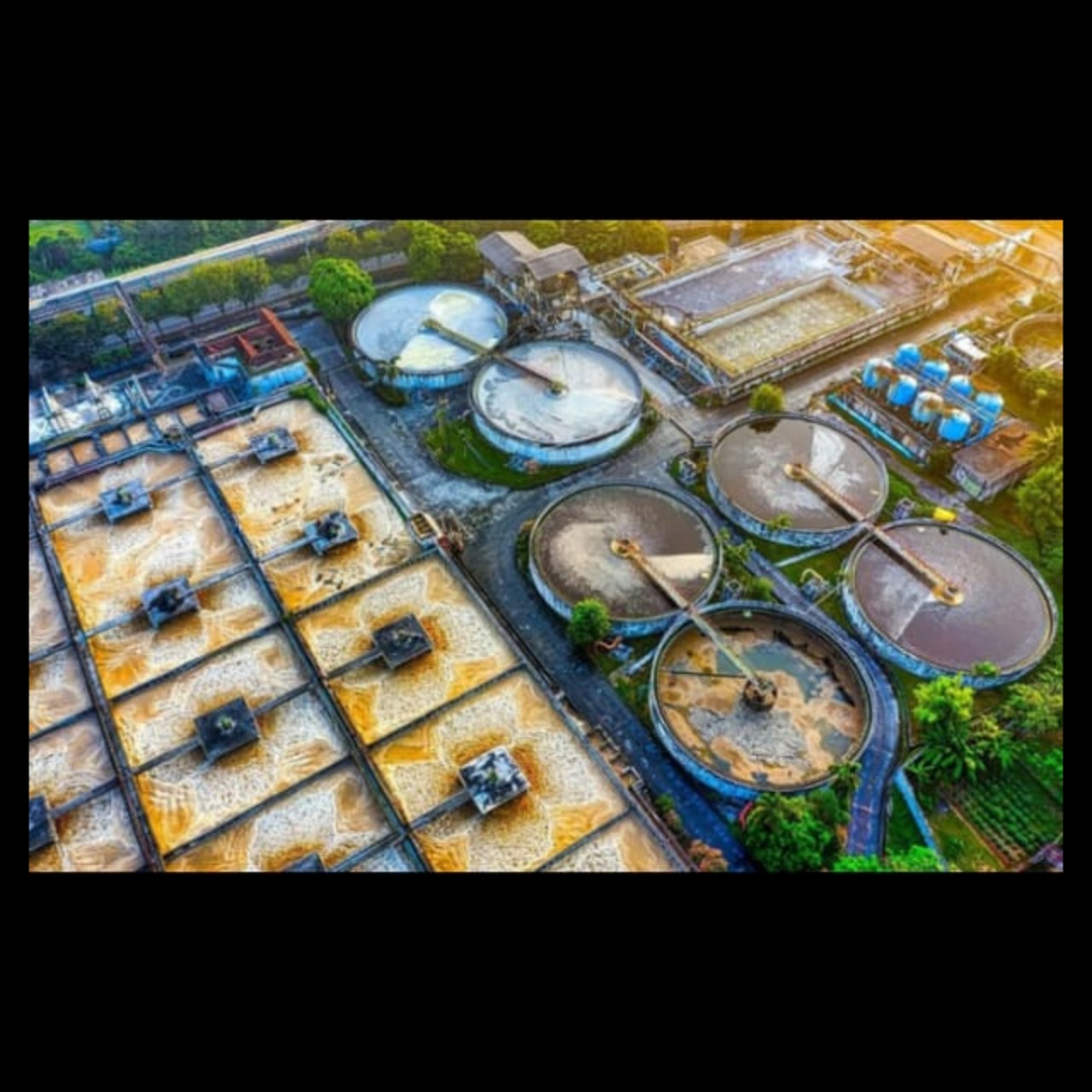
What is an Effluent Treatment Plant ?
A waste water treatment operation (WWTP) that treats waste water is called an effluent treatment plant, or ETP for short. It is utilized in industries with the highest risk of water contamination, such as chemicals, textiles, and pharmaceuticals. Both household sewage and industrial waste water are treated in large part by effluent treatment plants. An ETP plant's wastewater treatment process treats biological and non-biological materials, heavy metals, oil and grease, suspended particles, and other contaminants. Wastewater treatment plants can be of several types, including chemical, biological, a combination of chemical and biological, and thermal.
Why is Effluent Treatment Plant (ETP)
needed?
An ETP plant is essential to the treatment of industrial wastewater. ETP is primarily used to cleanse industrial wastewater so that it can be safely released into the environment or converted to recyclable water. According to government rules and regulations, every industry must install an ETP plant to treat its wastewater and waste in order to make it more recyclable or to release it safely into the environment.
According to state government circulars, treating wastewater and industrial waste is currently required. Water can now be safely released into rivers, lakes, ponds, or any other natural area, or it can be made more recyclable by the industry.
ETP Plants are required for the following -
- To construct reusable industrial wastewater
- To clean industrial wastewater before releasing it safely into rivers, lakes, ponds, or sewers.
- To prevent pollution of natural resources
- Government Rules and Regulations: An ETP plant is required under government rules and regulations.
What is the process of the ETP Plant?
The Effluent Treatment Plant's treatment process include managing slush for disposal, dismissing organic materials, and transferring suspended particles. The several operations that are involved are
- Equalization The raw effluent from different procedure units is positioned in the equalization tank. Wastewater is collected by an existing varied effluent tank and pumped to an existing aeration tank, which also serves as an equalization tank. Before the effluent is forced into the neutralization tank for treatment, it is homogenized using the variable aerator.
- PH Control The Bureau of Indian Standards (BIS) states that the pH value of effluent should be between 5.5 and 9.0.The wastewater's pH is adjusted using PH neutralization. Bases are used to change a solution's pH for waste that is acidic. The pH of a suspension is altered in the case of alkali waste acids.
- Coagulation The process of coagulation involves adding liquid aluminum sulfate to untreated water, which causes microscopic dust particles to cling to one another after mixing. This collection of particles creates bigger, more substantial particles that are easily separated by settling and filtering.
- Sedimentation Because water moves slowly in this process, the large particles sink to the bottom. Sludge is the term for the particles that collect at a container's bottom.
- Filtration The method of filtering water involves passing it through a device that separates particles. The layers of pebbles and sand are the filters. To regularly wash these filters, backwashing is necessary.
- Disinfection Water is sterilized prior to entering the dispensing system. Chlorine is used to disinfect and purify water.
- Sludge Drying Sedimentation causes solids to settle and become clam, after which they go to drying beds. The bed is split to allow for natural distribution to dry it out until the slush thickness reaches about 300 mm. At that point, the slush charging should be halted. About ten days are needed for this.