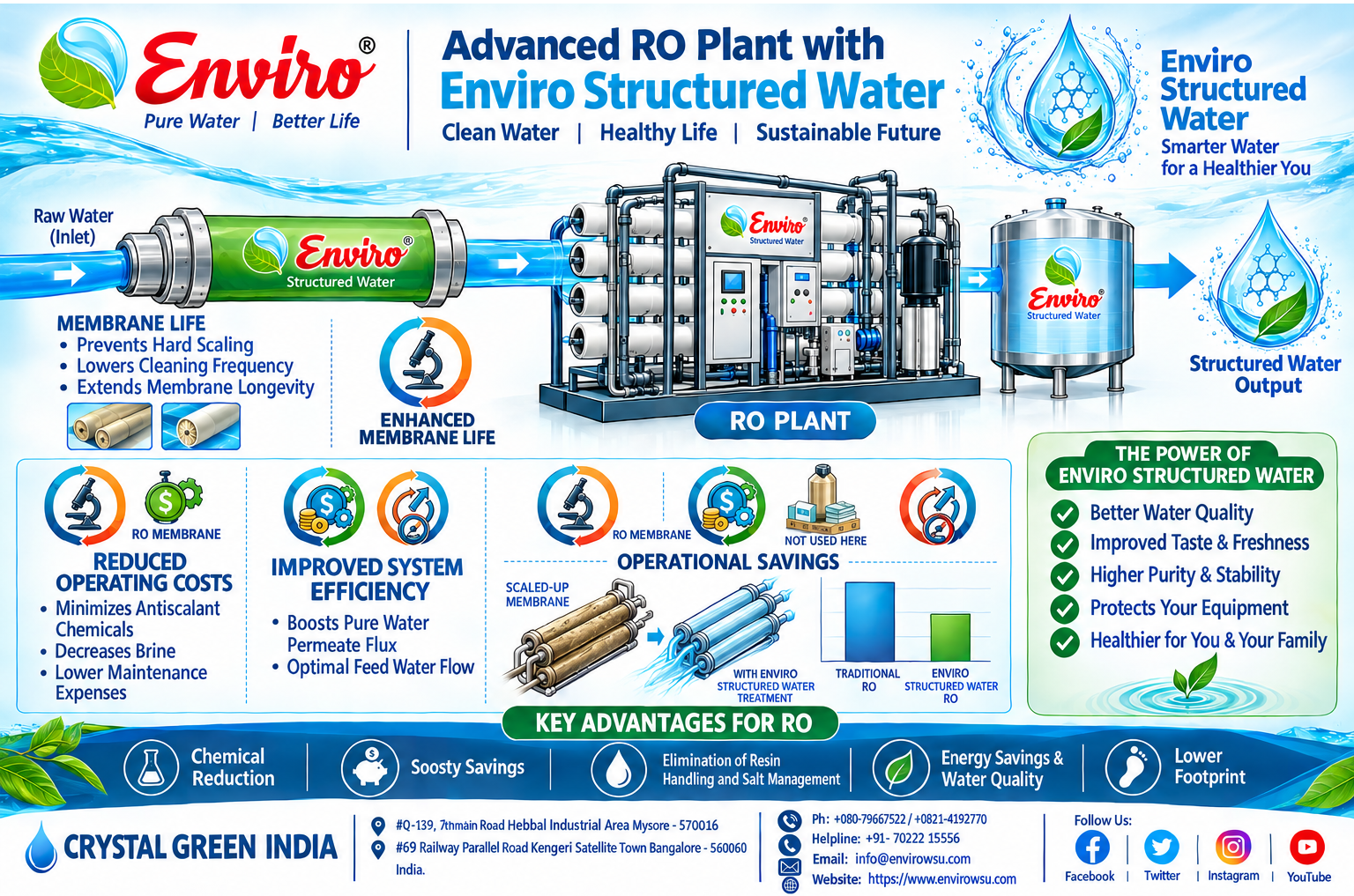
Why Raw-Water Testing Matters
One of the biggest mistakes in RO plant selection is choosing equipment only by capacity.
A 1, 000 LPH RO plant treating low-TDS municipal water and a 1, 000 LPH RO plant treating high-TDS borewell water may require very different pretreatment and operating conditions.
Before designing an Enviro RO plant, the following parameters can be evaluated:
pH
TDS
Electrical conductivity
Total hardness
Calcium
Magnesium
Alkalinity
Chloride
Sulphate
Silica
Iron
Manganese
Fluoride
Nitrate
Turbidity
Total suspended solids
Microbiological parameters
Additional parameters may be required depending on the source and application.
The laboratory report provides the foundation for membrane selection, pretreatment design and recovery calculation.
Water Quality Monitoring
An advanced RO plant should not operate without monitoring.
Depending on the application, an Enviro system can incorporate:
Feed TDS
Measures dissolved solids entering the RO system.
Product TDS
Provides an indication of RO permeate quality.
Conductivity
Useful for monitoring purified-water quality.
Pressure Gauges
Help operators identify membrane fouling and pressure changes.
Flow Meters
Monitor feed, permeate and reject flows.
pH Monitoring
Can be incorporated before or after treatment depending on the process.
Tank Level Sensors
Allow automatic starting and stopping of pumps.
Online monitoring helps operators identify changes before they become major operating problems.
Energy Efficiency in RO Plants
Energy consumption is an important consideration in commercial and industrial RO systems.
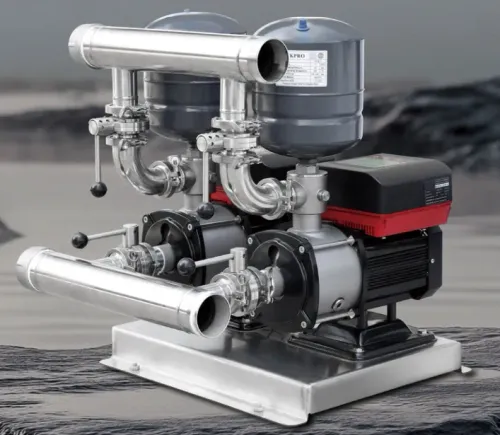
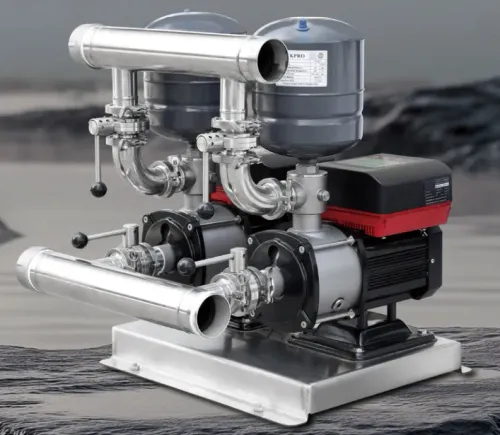
The high-pressure pump is generally one of the major electrical loads.
Energy consumption can be influenced by:
Feed pressure
TDS
Membrane selection
Recovery
Pump efficiency
Motor efficiency
Operating hours
Membrane condition
Using an appropriately sized high-pressure pump and efficient motor can reduce unnecessary energy consumption.
For larger systems, variable-frequency drives can also be considered where the process benefits from controlled pump operation.
RO Membrane Maintenance
Even a well-designed RO plant requires regular maintenance.
Common maintenance activities include:
Cartridge replacement
Membrane cleaning
Pump inspection
Pressure monitoring
Flow verification
TDS monitoring
Chemical dosing calibration
Tank cleaning
UV lamp inspection
Valve inspection
Electrical panel inspection
Membrane cleaning frequency depends on the quality of feed water and operating conditions.
A sudden increase in differential pressure or reduction in permeate flow can indicate fouling or scaling.
Common Problems in RO Plants
Low Product Flow
Possible causes include:
Membrane fouling
Low operating pressure
Low feed temperature
Pump performance problems
Blocked cartridge filter
High Product TDS
Possible causes include:
Membrane damage
Incorrect operating conditions
O-ring leakage
Poor membrane sealing
Membrane ageing
High Reject Flow
Possible causes may include:
Incorrect flow-control settings
Valve problems
Recovery configuration
Changes in feed-water conditions
Frequent Membrane Fouling
This can occur when pretreatment is inadequate or raw-water characteristics change.
Proper pretreatment is therefore essential.
Sustainability and RO Reject Water
Water efficiency should be considered during RO plant design.
RO reject should not automatically be treated as useless wastewater.
Depending on its quality and local regulations, it may potentially be considered for suitable non-potable applications such as:
Floor washing
Gardening
Toilet flushing
Cooling-tower applications
Other utility uses
Reuse must be evaluated based on the reject-water chemistry and the intended application.
A good RO design should therefore consider both permeate production and reject management.
CRYSTAL GREEN INDIA
#Q-139, 7th main Road Hebbal Industrial Area Mysore- 570016
#69 Railway Parallel Road Kengeri Satellite Town Bangalore - 560060
India. Ph: +080-79667522 / +0821-4192770, Helpline: +91- 70222 15556.
Email: info@envirowsu.com Website: https://www.envirowsu.com
Follow Us: Facebook | Twitter | Instagram | YouTube
@Bangalore @Hyderabad @Chennai @Surat @Ahmedbad @Mysore @Delhi @Mumbai @Pune @Indore @Gurugram