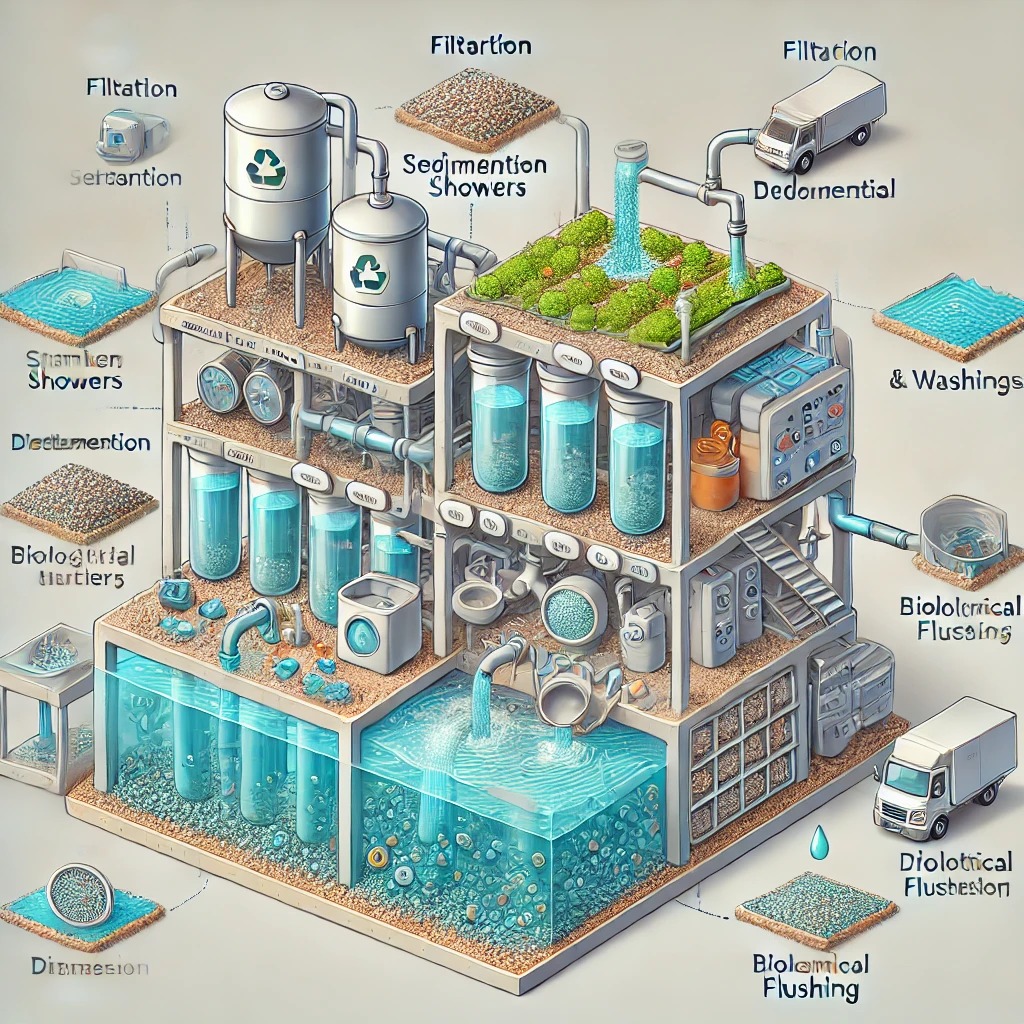
Grey Water Treatment
Grey water treatment mention to the process of treating and reusing grey water, which is wastewater from non-toilet plumbing sources like sinks, showers, bathtubs, and washing machines. This water can be treated and reused for non-potable purposes such as irrigation, toilet flushing, and even cooling systems, reducing water waste and conserving fresh water.
Grey Water Treatment Methods
- Filtration – Removes large particles and debris using sand, gravel, or mesh filters.
- Sedimentation – Allows solids to settle at the bottom, making water easier to treat.
- Biological Treatment – Uses bacteria to break down organic matter (e.g., constructed wetlands, biofilters).
- Chemical Treatment – Disinfection using chlorine, ozone, or ultraviolet (UV) light to kill bacteria and pathogens.
- Membrane Filtration – Advanced filtration (e.g., microfiltration, ultrafiltration) to remove fine contaminants.
Benefits of Grey Water Treatment
- Reduces freshwater consumption by recycling water for secondary uses.
- Lowers wastewater discharge and minimizes stress on sewage systems.
- Supports sustainable landscaping by providing irrigation water.
- Saves money on water bills by reusing treated water.
Importance of Grey Water Treatment
Grey water treatment plays a crucial role in water conservation, environmental sustainability, and cost savings. Here’s why it's important:
1. Water Conservation
- Reduces Freshwater Demand – Reusing gray water for irrigation, toilet flushing, or cleaning lowers the need for freshwater.
- Helps in Drought-Prone Areas – In regions with limited water resources, grey water reuse ensures water availability for essential needs.
2. Environmental Benefits
- Reduces Pressure on Sewage Systems – Treating and reusing gray water reduces the amount of wastewater flowing into municipal treatment plants.
- Prevents Water Pollution – Untreated wastewater can pollute rivers and lakes, but proper grey water treatment minimizes contamination.
- Enhances Soil Health – Grey water used for irrigation can provide nutrients to plants when properly filtered.
3. Cost Savings
- Lowers Water Bills – Households and businesses can cut down on utility costs by reusing grey water.
- Reduces Infrastructure Costs – Communities can save money by reducing the need for large-scale wastewater treatment facilities.
4. Energy Efficiency
- Saves Energy Used for Water Treatment – Treating and distributing freshwater requires significant energy. Reusing grey water locally reduces this energy consumption.
5. Supports Sustainable Living
- Encourages Eco-Friendly Practices – Grey water recycling promotes a sustainable lifestyle by making efficient use of water resources.
- Boosts Green Building Certifications – Many sustainable construction projects incorporate grey water recycling to meet environmental standards like LEED (Leadership in Energy and Environmental Design).
Advantages of Grey Water Treatment
Grey water treatment offers numerous benefits in terms of water conservation, cost savings, and environmental sustainability. Here are the key advantages:
1. Water Conservation
- Reduces freshwater consumption by recycling water for non-drinking purposes.
- Helps preserve natural water sources, especially in drought-prone areas.
2. Cost Savings
- Lowers water bills by reducing dependence on fresh municipal water.
- Reduces sewage treatment costs by diverting reusable water from wastewater systems.
3. Environmental Benefits
- Reduces wastewater discharge, decreasing pollution in rivers and lakes.
- Prevents overloading of sewage systems, reducing the risk of contamination and blockages.
- Enhances soil quality when used for irrigation, as grey water contains beneficial nutrients.
4. Energy Efficiency
- Lowers energy use required for water treatment and pumping fresh water.
- Reduces the carbon footprint by minimizing water transportation and large-scale treatment processes.
5. Sustainable Landscaping
- Provides a reliable water source for irrigation, especially in dry regions.
- Supports eco-friendly gardening by reducing reliance on chemically treated tap water.
6. Encourages Sustainable Living
- Helps businesses and homes achieve green building certifications like LEED.
- Promotes self-sufficiency in water management.
7. Increases Property Value
- Homes with grey water recycling systems are often more attractive to eco-conscious buyers.
- Businesses adopting gray water systems can enhance their sustainability image.
Source By:https://www.envirowatertreatments.com/