Water is the lifeblood of industry and the essence of human health. However, with increasing pollution and dwindling freshwater sources, the demand for efficient water purification technologies has never been higher. Enter the Reverse Osmosis (RO) Plant—the gold standard for water desalination and purification.
Whether it is turning seawater into drinking water or providing ultra-pure water for pharmaceutical manufacturing, RO plants are the unsung heroes of modern infrastructure. But how does an RO plant actually work?
In this blog, we will break down the step-by-step working process of a Reverse Osmosis plant, explaining the science behind the magic.
The Basic Concept: What is Reverse Osmosis?
To understand Reverse Osmosis, we first need to understand natural Osmosis.
In nature, if you have two solutions of water with different concentrations of salt separated by a semi-permeable membrane, water will naturally flow from the less concentrated side (clean water) to the more concentrated side (salty water) to equalize the balance. This is nature's way of seeking equilibrium.
Reverse Osmosis does the opposite. By applying high pressure to the concentrated side (salty/dirty water), we force the water molecules to move against the natural flow, leaving the salts and impurities behind. The result? Pure, clean water on the other side.
The Step-by-Step Working Process
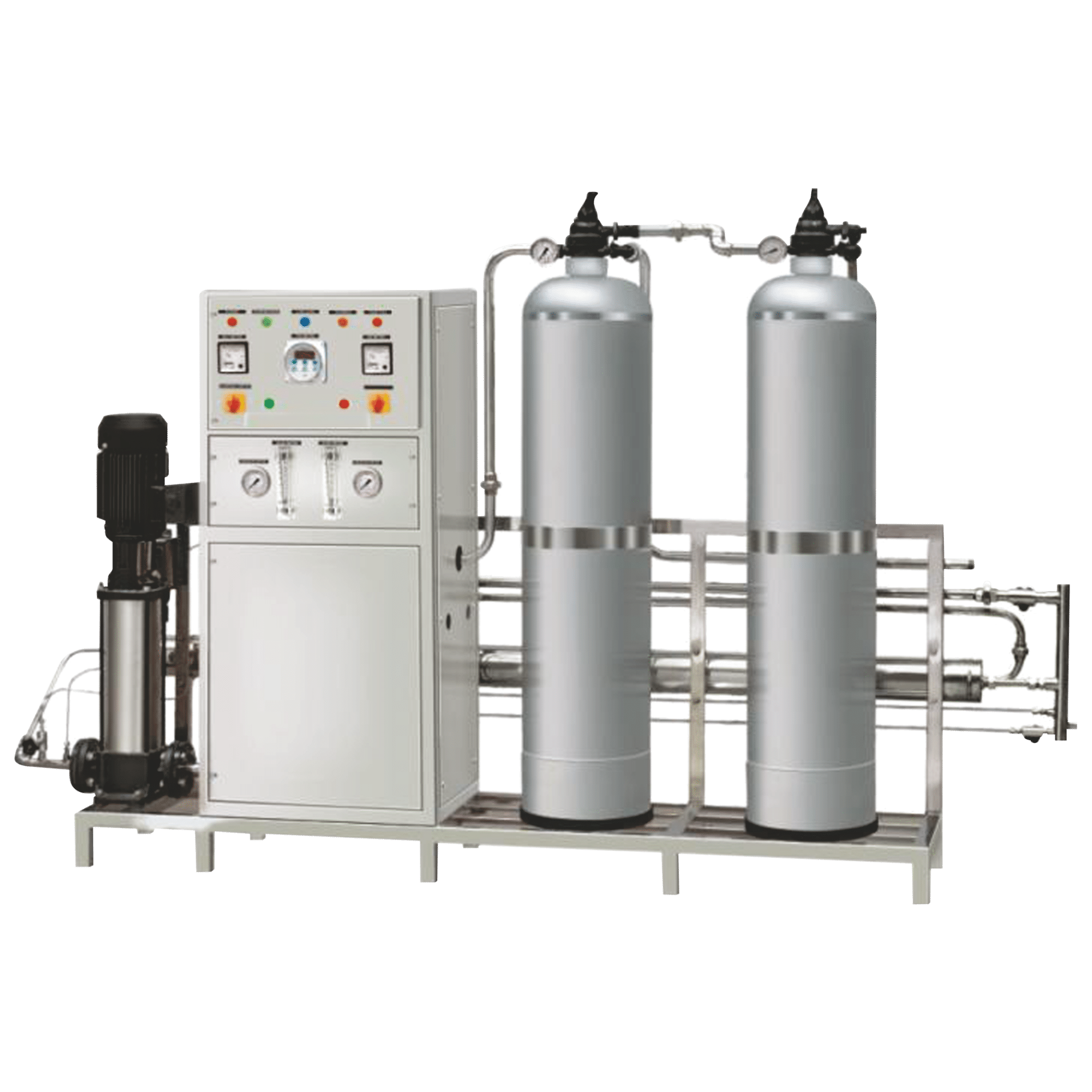
An industrial RO plant is not just a single filter; it is a sophisticated system of stages. Here is the journey a drop of water takes through the plant:
Step 1: Pre-Treatment (The Protection Phase)
Raw water—whether from a borewell, river, or sea—contains suspended solids, chlorine, and organic matter. If this water hit the delicate RO membrane directly, it would clog or destroy it within hours. Pre-treatment is crucial.
Chlorine Dosing: To kill bacteria and algae.
Media Filtration: Water passes through sand filters to remove large suspended particles and carbon filters to remove chlorine (which damages the membrane).
Micron Cartridge Filter: A final polish filter removes any fine particles larger than 5-10 microns before the water enters the high-pressure pump.
Step 2: The High-Pressure Pump (The Engine)
Once pre-treated, the water enters the heart of the system: the high-pressure pump. This pump applies the necessary force (pressure) required to push the water through the semi-permeable membrane.
Note: The pressure required depends on the salinity of the water. Brackish water requires less pressure than seawater.
Step 3: The Membrane Module (The Separation Phase)
This is where the real work happens. The pressurized water enters the membrane housing.
The Membrane: These are usually spiral-wound elements made of thin-film composite material. The pores are microscopic (0.0001 microns)—so small that only water molecules can pass through.
Separation: As pressure pushes the water, it splits into two streams:
Permeate (Product Water): The pure water that passes through the membrane.
Concentrate (Reject Water): The water containing all the salts, minerals, and impurities that didn't pass through.
Step 4: Post-Treatment (The Polishing Phase)
The permeate water is now 98% to 99% pure. However, it is often slightly acidic and “aggressive“ (corrosive) because all minerals have been removed. Depending on the application, post-treatment may include:
pH Adjustment: Adding lime or caustic soda to neutralize the pH.
Remineralization: Adding essential minerals back in (common for drinking water plants).
UV Disinfection/Ozonation: A final step to ensure no bacteria survived the process, ensuring long-term storage safety.
Step 5: Distribution and Storage
The final purified water is sent to a storage tank, ready for distribution to a municipal tap, a factory boiler, or a bottling line.
Why is RO Technology So Popular?
Unmatched Purity: It removes up to 99% of dissolved salts, particles, organics, and bacteria.
Versatility: It works on well water, tap water, brackish water, and even seawater.
Cost-Effective: Compared to distillation, RO is energy-efficient because it involves no phase change (liquid to gas).
Automation: Modern RO plants are fully automated, requiring minimal manual intervention.
Conclusion
The Reverse Osmosis plant is a marvel of engineering that mimics and reverses a natural biological process. By understanding the stages—from pre-treatment protection to the high-pressure separation—we can better appreciate the complex infrastructure required to deliver clean water.
Whether you are managing a factory or simply filling a glass of water at home, RO technology ensures that what you are drinking is safe, pure, and healthy.