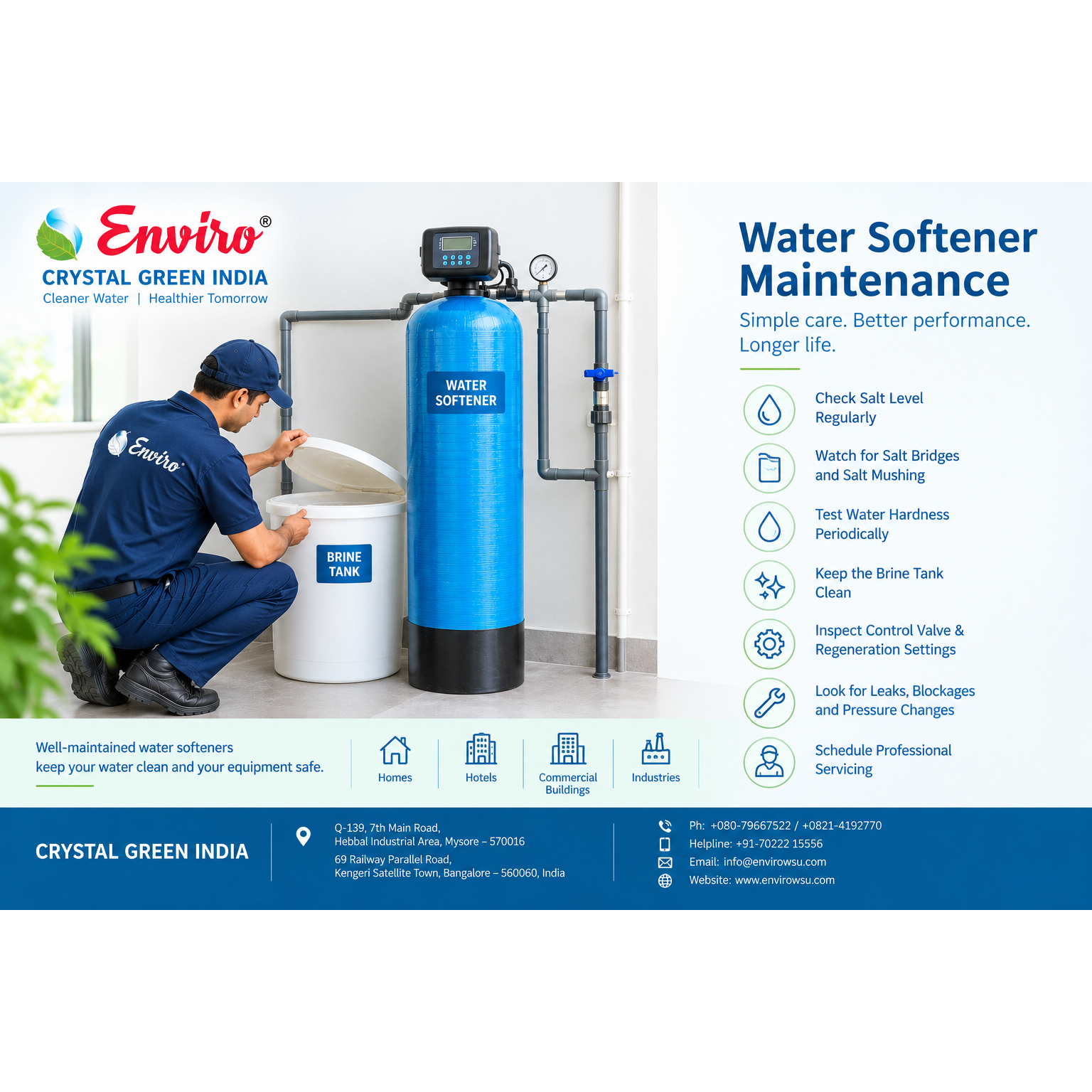
Regular checks help a water softener control scale and maintain performance. Monitor salt, test treated-water hardness, and check the regeneration cycle to catch issues early.
For homes, hotels, commercial buildings and industrial sites, maintenance depends on water quality, system capacity and usage. Always follow the manufacturer's instructions.
Why regular maintenance matters
Neglected softeners may use excess salt, allow hardness through or fail to regenerate correctly. Routine care helps maintain performance, protect the resin and control valve, reduce scale and avoid downtime.
A sensible routine helps to:
• Maintain consistent softening performance.
• Limit scale in compatible pipes and equipment.
• Spot faults before they become costly repairs.
• Control salt use and regeneration.
• Protect resin and control components.
• Reduce unplanned downtime.
These checks are especially important where several systems rely on softened water.
7 water softener maintenance tips
1. Check the salt level
Check the brine tank every few weeks initially, then follow usage and manufacturer guidance. Look for low salt, hardened crusts, unusual water levels or salt that is not dissolving. Use the recommended salt and do not overfill.
2. Look for salt bridges and mushing
A salt bridge forms a hard crust over an empty space; mushing is a thick residue at the tank bottom. Both can prevent proper brine preparation. Follow the manufacturer's safe procedure and avoid sharp tools. Repeated problems call for tank cleaning or inspection.
3. Test softened water
Water feel and appearance do not show hardness reliably. Use a suitable test kit and compare results with your application's needs. If hardness rises, check salt and regeneration; persistent problems may indicate resin or valve faults. Test more often where process requirements demand it.
4. Clean the brine tank when needed
Follow the manual and isolate the system as directed. Safely remove remaining salt and brine, clean with an approved method, rinse, inspect accessible parts and refill with recommended salt. Avoid household cleaners unless approved by the manufacturer.
5. Check the control valve and regeneration
Confirm the controller time and settings, expected regeneration, absence of leaks or error messages, and normal return to service. Frequent or incomplete cycles need technician attention. Avoid changing advanced settings without understanding system capacity and incoming hardness.
6. Inspect connections and pressure
Check accessible pipes, fittings, bypass valves and brine lines for leaks or damage. Pressure loss may indicate plumbing restrictions, clogged components, a restricted resin bed or undersizing. Do not open pressurised vessels or dismantle valves while running; leave internal repairs to trained personnel.
7. Arrange professional servicing
A technician can test inlet/outlet hardness, check brine draw and regeneration, inspect the valve and injector, assess resin performance, and review flow, pressure loss and salt use. Set service intervals according to the manual, water quality and usage; larger sites should keep maintenance records.
How often should a water softener be checked?
Use this schedule as a starting point and adjust it to the model, demand and manufacturer's advice.
Maintenance task Suggested frequency
Check the salt level Every 2–4 weeks
Look for visible leaks Monthly
Test treated-water hardness Monthly at first; adjust based on results
Check regeneration operation Monthly or as recommended
Look for salt bridging During salt checks
Clean the brine tank When needed, following manufacturer guidance
Professional inspection At the recommended service interval
For boilers, heat pumps and processes with strict water-quality limits, test as often as the equipment specifications require.
Common problems and what they may mean
Water still tests hard: low salt, incorrect settings, blocked brine line, exhausted resin or a valve fault. Test before arranging repairs.
Too much salt used: frequent regeneration, incorrect settings, high demand or a valve problem. Review the operating pattern before changing settings.
Salt level barely changes: possible salt bridge, brine-draw problem or incomplete regeneration.
Low water pressure: check plumbing restrictions and fitted filters; a restricted resin bed or valve may need technician assessment.
Leak or error message: a connection, seal, valve or control fault may be responsible. Follow safety guidance and arrange service as needed.
Identify the cause before replacing parts to avoid unnecessary expense.
When does resin need replacing?
Resin captures hardness minerals and can last for years, but chlorine, iron, organic fouling, physical damage and unsuitable operating conditions can reduce its effectiveness.
Before replacing resin, check regeneration, the injector, control valve and whether demand exceeds system capacity. A professional can advise whether cleaning, pretreatment or replacement is needed.