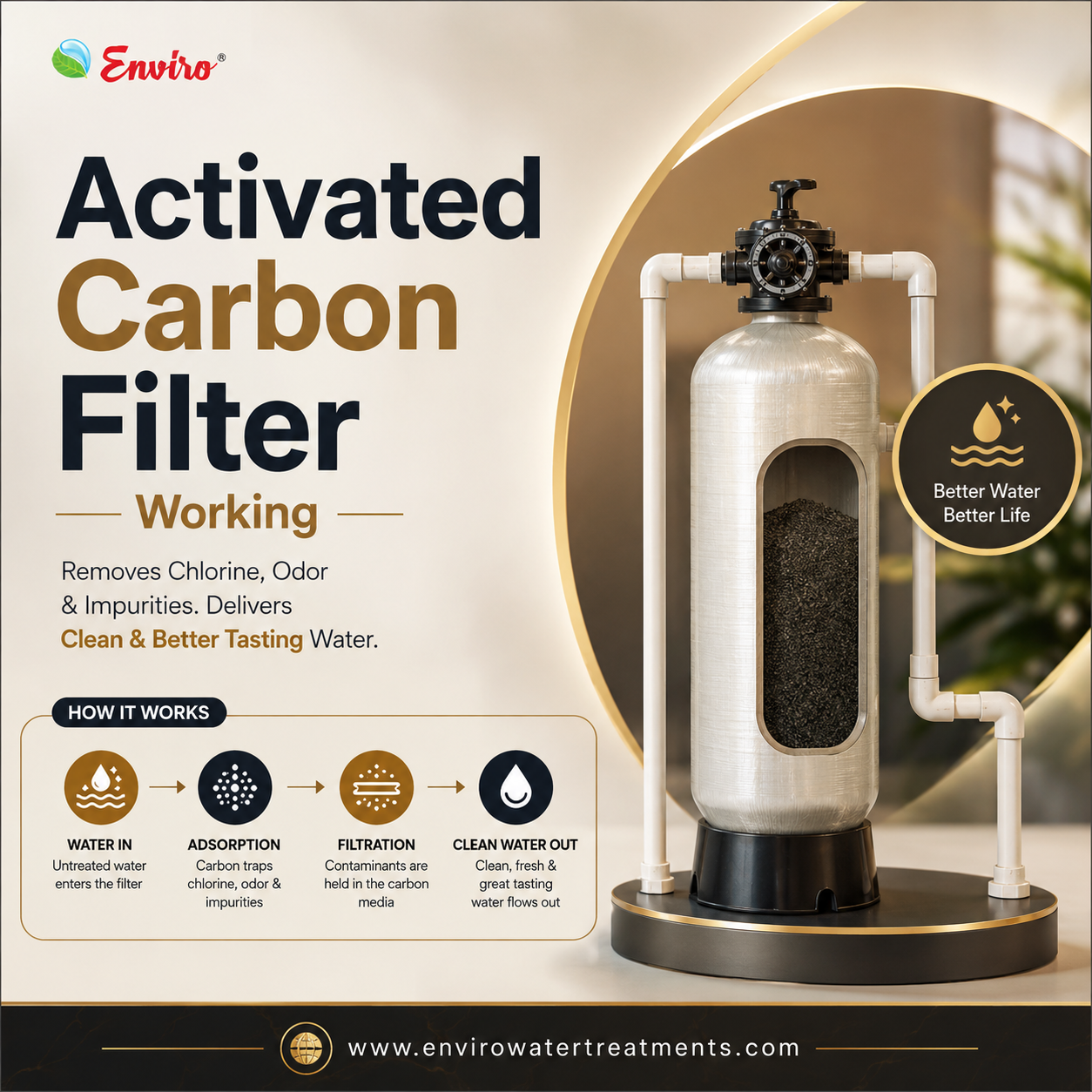
Activated Carbon Filter Working: Process, Benefits & Applications
Learn how an activated carbon filter works, its process, benefits, applications, and role in water treatment systems for removing chlorine, odor, and impurities.
Water used in homes, industries, and commercial buildings may contain chlorine, bad odor, chemicals, organic impurities, and unpleasant taste. These contaminants can affect water quality, appliance life, and overall user experience.
An Activated Carbon Filter is one of the most widely used filtration systems for improving water quality. It is highly effective in removing chlorine, odor, taste, and harmful organic compounds from water.
Activated carbon filtration is commonly used in RO plants, industrial water treatment systems, commercial filtration units, and domestic water purification systems.
What is an Activated Carbon Filter?
An Activated Carbon Filter is a water filtration system that uses specially processed carbon media to remove contaminants from water.
The carbon material contains millions of microscopic pores that trap impurities through a process called adsorption.
Activated carbon filters are mainly used for:
- Chlorine removal
- Odor removal
- Taste improvement
- Organic chemical reduction
- Water quality enhancement
What is Activated Carbon?
Activated carbon is a specially treated form of carbon with a very high surface area and porous structure.
It is commonly produced from:
- Coconut shell
- Coal
- Wood
- Charcoal-based materials
The porous structure helps capture contaminants effectively.
How Does Activated Carbon Filter Work?
Activated carbon filtration works mainly through a process called adsorption.
Adsorption Process
When water flows through activated carbon media:
- Contaminants attach to the surface of carbon
- Chlorine and chemicals become trapped inside pores
- Clean water passes through the filter
Unlike absorption, adsorption traps impurities on the outer surface of the carbon media.
Step-by-Step Activated Carbon Filter Working Process
1. Water Enters the Filter
Raw or untreated water enters the activated carbon vessel or cartridge.
2. Contact with Activated Carbon Media
Water flows through activated carbon granules or carbon blocks.
The carbon media attracts impurities and unwanted compounds.
3. Removal of Chlorine and Odor
The activated carbon removes:
- Chlorine
- Bad smell
- Unpleasant taste
- Organic contaminants
This improves water quality significantly.
4. Clean Water Output
Filtered water exits the system with better taste, odor, and clarity.
Types of Activated Carbon Filters
1. Granular Activated Carbon (GAC) Filter
This filter uses loose activated carbon granules.
Benefits:
- Good water flow rate
- Effective chlorine removal
- Commonly used in domestic filtration systems
2. Carbon Block Filter
This filter uses compressed carbon blocks for finer filtration.
Benefits:
- Better contaminant removal
- Higher filtration efficiency
- Longer contact time with water
Applications of Activated Carbon Filter
Activated carbon filters are widely used in different industries and water treatment systems.
Residential Water Filtration
Improves drinking water taste and removes chlorine odor.
RO Water Treatment Plants
Protects RO membranes from chlorine damage.
Industrial Water Treatment
Removes chemicals and organic impurities from process water.
Food and Beverage Industry
Provides clean water for processing and production.
Pharmaceutical Industry
Improves water purity standards for manufacturing processes.
Benefits of Activated Carbon Filter
Effectively removes chlorine
Improves taste and odor of water
Reduces harmful chemicals
Protects RO membranes and equipment
Improves overall water quality
Easy to maintain and operate
What Activated Carbon Filter Cannot Remove
Although activated carbon filters are highly effective, they cannot completely remove:
- Dissolved salts
- Hardness
- Heavy metals completely
- Bacteria and viruses
For complete purification, activated carbon filters are usually combined with:
- RO systems
- UV systems
- Water softeners
- Micron filters
Activated Carbon Filter in Water Treatment Systems
Activated carbon filters are commonly installed after Pressure Sand Filters and before RO systems.
Typical filtration sequence:
Pressure Sand Filter → Activated Carbon Filter → Micron Filter → RO System
This arrangement improves filtration performance and protects downstream equipment.
Signs That an Activated Carbon Filter Needs Replacement
Bad smell returning in water
Poor taste in filtered water
Reduced water flow
Decrease in filtration performance
Regular replacement of carbon media is important for efficient operation.
Maintenance of Activated Carbon Filter
Proper maintenance helps improve filter life and efficiency.
Maintenance tips:
- Replace carbon media periodically
- Perform regular backwashing
- Monitor water quality
- Clean filter vessels when required
Activated Carbon Filter vs Pressure Sand Filter
Activated Carbon Filter
Removes:
- Chlorine
- Odor
- Organic chemicals
- Taste impurities
Pressure Sand Filter
Removes:
- Sand
- Dust
- Suspended particles
- Sediments
Both systems are commonly used together for complete water treatment.
Conclusion
Activated carbon filters are an essential part of modern water treatment systems. They effectively remove chlorine, odor, chemicals, and organic impurities while improving water taste and quality.
Whether used in homes, industries, or RO plants, activated carbon filtration helps ensure cleaner and safer water for various applications.
Investing in the right activated carbon filtration system improves water quality, protects equipment, and enhances overall system performance.
Looking for an activated carbon filtration system for your home or industry?
Call Now: +91 9945125656
Get expert consultation and customized water treatment solutions.