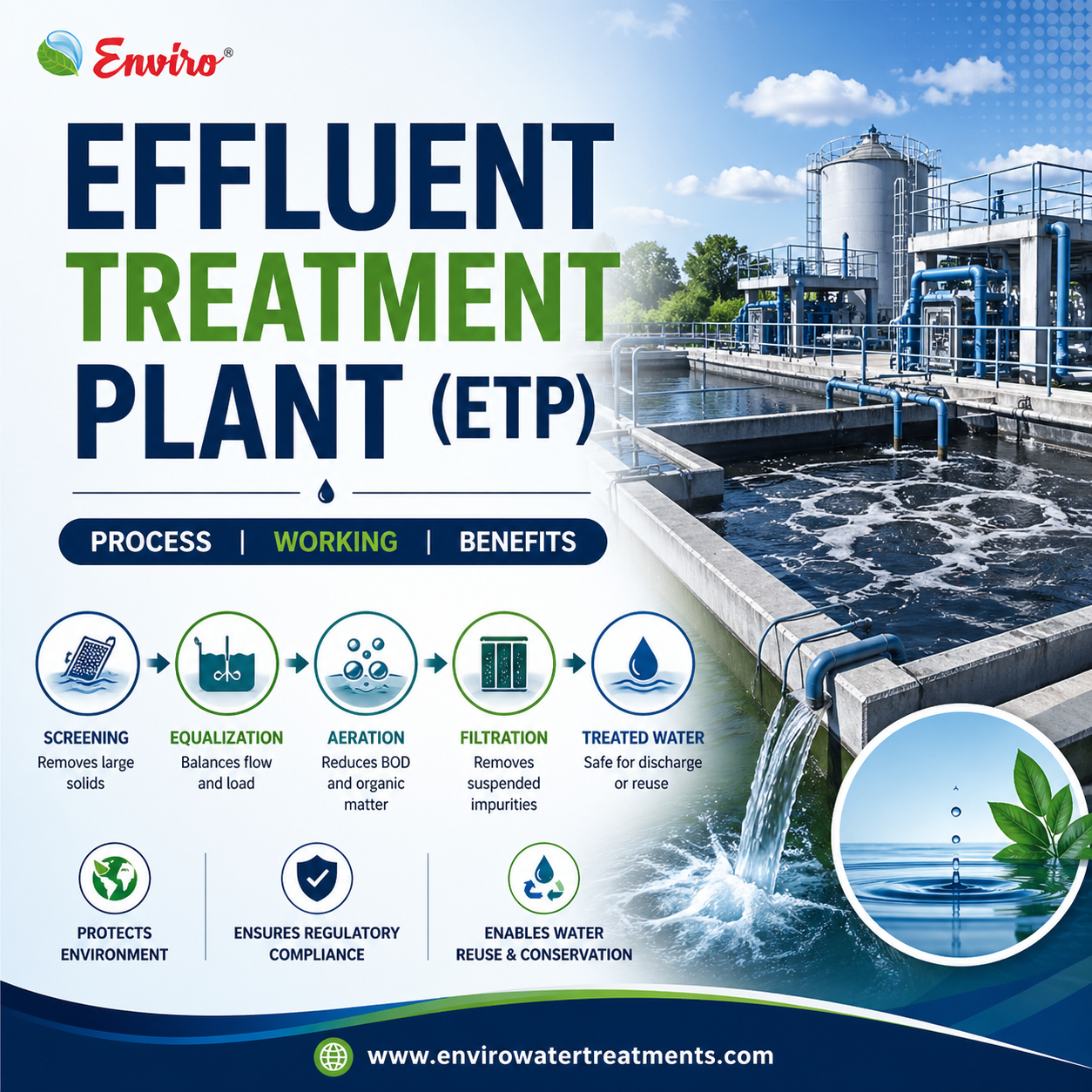
Learn how an Effluent Treatment Plant (ETP) works, including its process, stages, benefits, and industrial applications. Discover why ETP is essential for wastewater treatment and environmental protection.
Industries generate wastewater that contains harmful chemicals, oils, heavy metals, and pollutants. Discharging untreated water into the environment can cause serious damage to ecosystems and human health.
An Effluent Treatment Plant (ETP) is designed to treat industrial wastewater and make it safe for discharge or reuse. It plays a crucial role in maintaining environmental safety and regulatory compliance.
What is an Effluent Treatment Plant (ETP)?
An Effluent Treatment Plant (ETP) is a water treatment system used to remove contaminants from industrial wastewater. It treats water by removing physical, chemical, and biological impurities.
The treated water can be safely discharged into the environment or reused for industrial processes.
Why is ETP Important?
Installing an ETP system is essential for industries due to the following reasons:
Prevents water pollution
Protects natural water bodies
Ensures compliance with government regulations
Reduces environmental impact
Enables water reuse and conservation
ETP Plant Working Process
The ETP process involves multiple stages to remove different types of impurities.
1. Preliminary Treatment
This is the first stage where large particles are removed.
Includes:
Screening to remove solids
Oil and grease removal
Equalization tank to balance flow and load
2. Primary Treatment
In this stage, suspended solids are removed using physical and chemical methods.
Includes:
Coagulation and flocculation
Sedimentation process
Chemicals are added to form flocs, which settle down as sludge.
3. Secondary Treatment (Biological Treatment)
This stage removes organic pollutants using microorganisms.
Includes:
Aeration tank (bacteria break down organic matter)
Activated sludge process
This is one of the most important stages for reducing BOD and COD levels.
4. Tertiary Treatment (Advanced Treatment)
This stage ensures high-quality treated water.
Includes:
Filtration (Pressure Sand Filter)
Activated Carbon Filter
Disinfection (Chlorination/UV)
5. Sludge Treatment
The sludge collected from earlier stages is treated and disposed of safely.
Includes:
Sludge thickening
Dewatering
Drying
Types of ETP Plants
Different industries require different ETP systems:
Physical-Chemical ETP
Biological ETP
Combined ETP Systems
Applications of ETP Plant
ETP systems are widely used in:
Textile industries
Pharmaceutical industries
Food and beverage industries
Chemical manufacturing units
Dyeing and printing industries
Paper and pulp industries
Benefits of Effluent Treatment Plant
Removes harmful pollutants effectively
Protects environment and public health
Reduces water consumption through reuse
Ensures compliance with pollution control norms
Improves sustainability of industries
Common Problems Without ETP
Water pollution
Legal penalties and shutdown risks
Damage to aquatic life
Soil contamination
Public health issues
Maintenance of ETP Plant
Proper maintenance is essential for efficient performance.
Regular monitoring of water quality
Timely chemical dosing
Cleaning of tanks and filters
Sludge removal
Routine inspection of equipment
Conclusion
An Effluent Treatment Plant (ETP) is an essential system for industries to treat wastewater and reduce environmental impact. By removing harmful contaminants, it ensures safe discharge and promotes sustainable water management.
Investing in an ETP plant not only helps industries comply with regulations but also supports long-term environmental protection.
Call to Action
Looking for an efficient ETP solution for your industry?
Call Now: +91 9945125656
Get expert consultation and customized water treatment solutions tailored to your needs.