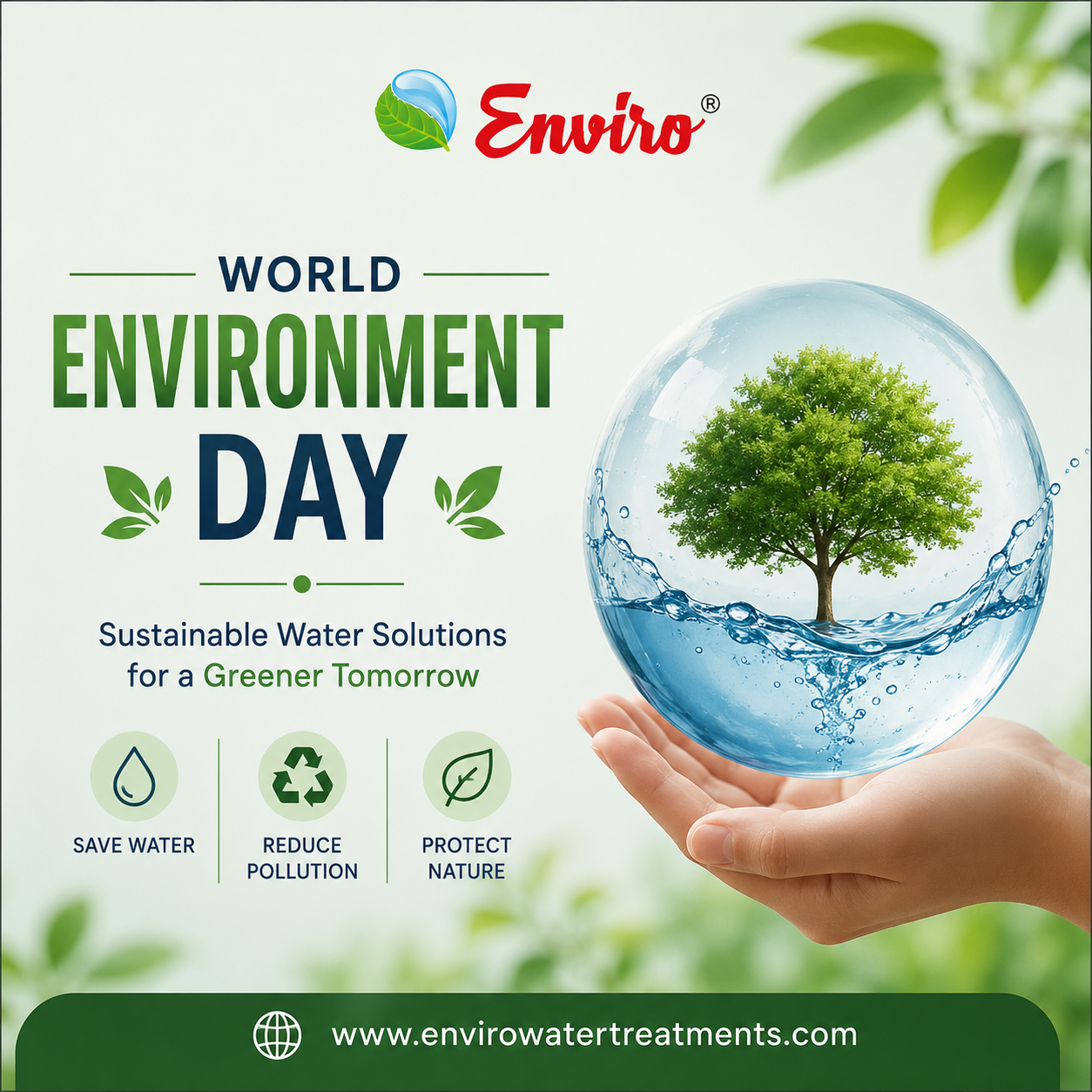
World Environment Day: Sustainable Water Solutions for a Greener Tomorrow
Discover how sustainable water treatment solutions, water conservation, and wastewater recycling contribute to environmental protection and a greener future.
World Environment Day and the Importance of Water
World Environment Day is celebrated every year on June 5 to raise awareness about environmental protection and encourage sustainable practices. As global populations grow and water resources face increasing pressure, protecting our environment has become more important than ever.
Water is one of the Earth's most valuable resources. It supports human life, agriculture, industries, and ecosystems. However, increasing pollution, excessive consumption, and climate change are placing tremendous stress on freshwater resources.
Adopting sustainable water management practices is essential for ensuring clean water availability for future generations.
Why Water Conservation Matters
Although water covers most of the Earth's surface, only a small percentage is suitable for drinking and daily use.
Water conservation helps:
- Preserve natural water resources
- Reduce water scarcity
- Protect ecosystems and biodiversity
- Lower energy consumption
- Support sustainable development
Every drop saved today contributes to a healthier environment tomorrow.
Major Environmental Challenges Related to Water
Several environmental issues are directly linked to water management.
Water Pollution
Industrial discharge, sewage, and agricultural runoff contaminate rivers, lakes, and groundwater sources.
Water Scarcity
Growing populations and increasing demand are causing water shortages in many regions.
Groundwater Depletion
Excessive extraction of groundwater reduces water availability and affects long-term sustainability.
Climate Change
Changing weather patterns impact rainfall distribution and water availability.
Addressing these challenges requires effective water treatment and conservation solutions.
Sustainable Water Solutions for a Greener Tomorrow
Modern water treatment technologies play a vital role in protecting the environment and conserving water resources.
Water Treatment Systems
Water treatment systems remove contaminants and improve water quality for domestic, commercial, and industrial use.
Benefits include:
- Safe drinking water
- Reduced pollution
- Improved public health
- Sustainable water management
Reverse Osmosis (RO) Systems
RO systems remove dissolved salts, chemicals, and impurities from water.
Advantages:
- High-quality purified water
- Reduced dependence on bottled water
- Improved water safety
Water Softeners
Hard water can cause scaling and reduce equipment efficiency.
Water softeners help by:
- Removing hardness-causing minerals
- Protecting plumbing systems
- Reducing maintenance costs
DM Water Plants
Demineralization systems produce highly purified water for industrial applications.
Benefits:
- Improved equipment performance
- Reduced scaling and corrosion
- Better product quality
Wastewater Treatment and Environmental Protection
Treating wastewater before discharge is essential for protecting natural water bodies.
Effluent Treatment Plants (ETP)
ETPs treat industrial wastewater and remove harmful pollutants before disposal or reuse.
Benefits:
- Reduces industrial pollution
- Protects rivers and lakes
- Supports environmental compliance
Sewage Treatment Plants (STP)
STPs treat domestic wastewater generated from homes, apartments, and commercial buildings.
Benefits:
- Improved sanitation
- Reduced environmental contamination
- Water recycling opportunities
Water Recycling and Reuse
Water recycling is one of the most effective ways to conserve water resources.
Treated water can be reused for:
- Gardening
- Landscaping
- Cooling towers
- Industrial processes
- Flushing systems
Water reuse reduces freshwater demand and promotes sustainable resource management.
How Industries Can Contribute to Environmental Sustainability
Industries play a crucial role in environmental protection through responsible water management.
Key initiatives include:
- Installing ETP and STP systems
- Recycling treated wastewater
- Reducing water consumption
- Adopting energy-efficient technologies
- Monitoring water quality regularly
Sustainable industrial practices help protect both the environment and business operations.
How Individuals Can Help Save Water
Simple daily actions can make a significant difference.
Tips for water conservation:
- Fix leaking taps and pipelines
- Use water-efficient appliances
- Avoid unnecessary water wastage
- Harvest rainwater
- Reuse water whenever possible
- Promote awareness about water conservation
Small efforts collectively create a large positive impact.
Building a Sustainable Future Through Water Management
Environmental sustainability begins with responsible use of natural resources. Clean water, efficient treatment systems, wastewater recycling, and conservation practices are key elements of sustainable development.
Investing in modern water treatment technologies not only protects water resources but also helps create healthier communities and a cleaner environment.
As we celebrate World Environment Day, it is important to remember that every action taken toward water conservation contributes to a greener and more sustainable future.
Clean Water • Green Future
Water is essential for life, environmental balance, and economic growth. By embracing sustainable water solutions and responsible water management practices, we can reduce pollution, conserve resources, and protect the planet for future generations.
This World Environment Day, let us commit to protecting nature, preserving water, and building a greener tomorrow.