MICRON FILTER AND KEY FEATURES
A micron filter is a type of filtration device designed to remove particles from liquids or gases based on their size, measured in microns (µm). One micron equals one-millionth of a meter. These filters are widely used in various industries, including water purification, pharmaceuticals, food and beverage production, and manufacturing.
Key Features of Micron Filters:
- Filtration Levels:
- Nominal Micron Filters: Capture a specified percentage (usually 50-98%) of particles of a certain size.
- Absolute Micron Filters: Ensure removal of 99.9% of particles of the specified size or larger.
- Sizes: Micron filters are available in various sizes, such as 0.1 µm, 1 µm, 5 µm, 10 µm, and so on. The size indicates the smallest particle the filter can trap. For example:
- 0.1 µm: Typically used for bacteria removal.
- 5 µm: Suitable for sediment and visible particulate matter.
- Materials:
- Polyester
- Polypropylene
- Stainless steel
- Nylon
- Other synthetic or natural fibers
- Types:
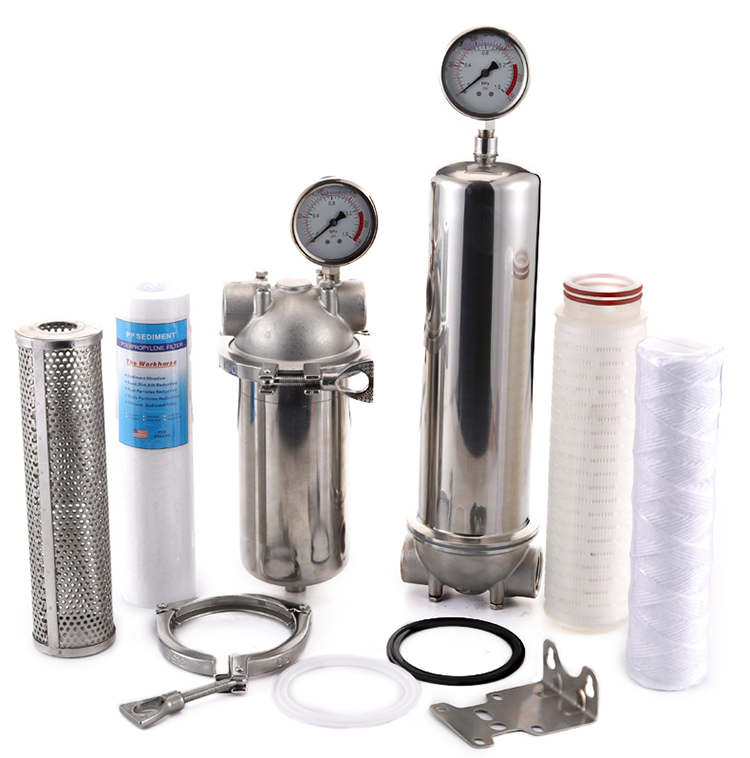
- Bag Filters: Often used in industrial processes.
- Cartridge Filters: Cylindrical and replaceable, used in water filtration systems.
- Disc Filters: Compact and efficient for specific applications.
- Screen Filters: Durable and easy to clean, often used for coarse filtration.
- Applications:
- Water Treatment: Removing sediment, rust, or other particulates from water.
- Pharmaceuticals: Ensuring sterile filtration and removal of microorganisms.
- Food and Beverage: Filtering impurities while maintaining taste and quality.
- Oil and Gas: Protecting machinery from contaminants.