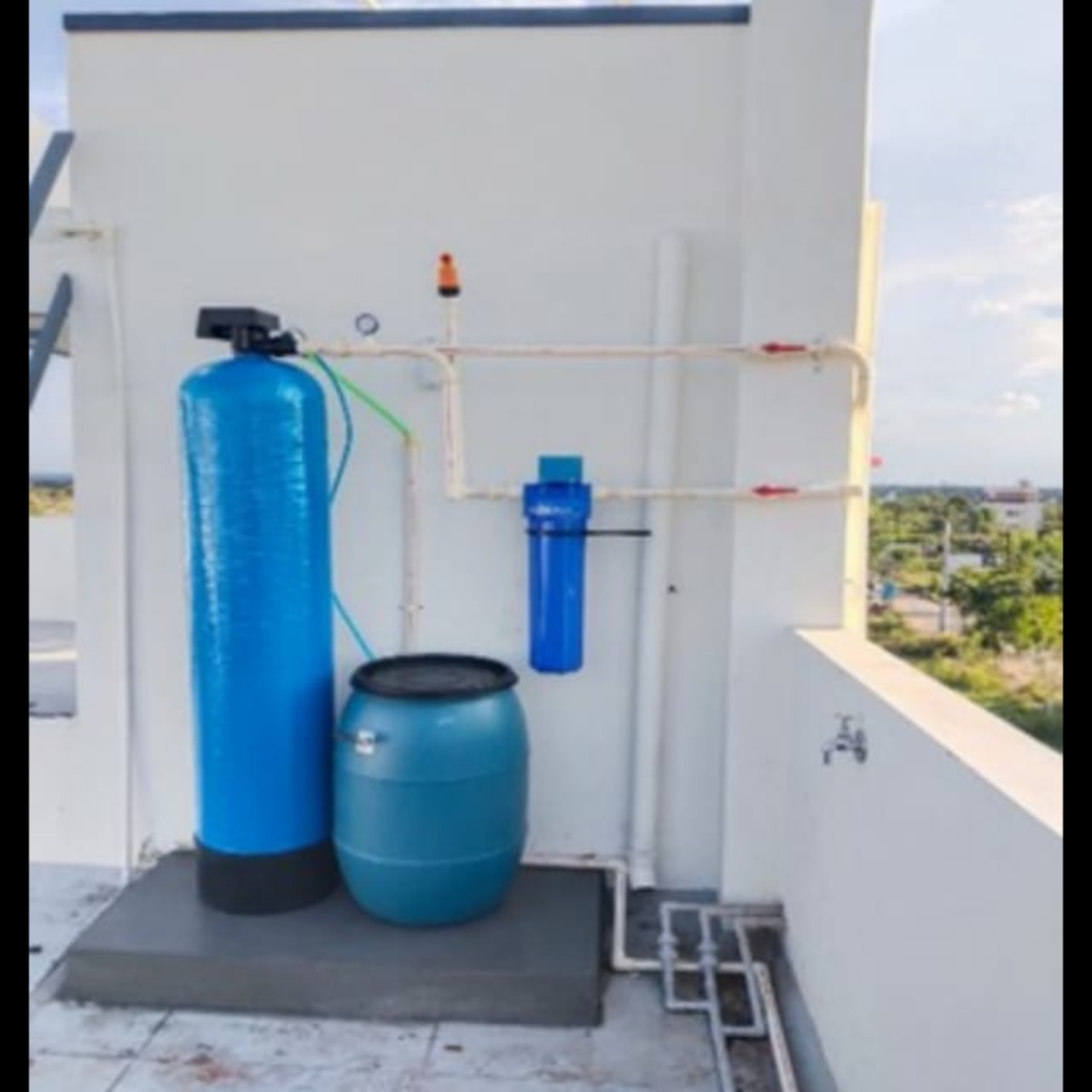
What is Ion Exchange
The chemical process
of exchanging ions in a solution with ions from a solid material, usually a
resin, that have a similar charge is known as ion exchange. This procedure is
frequently employed in many different applications.
- Water softening: Removing calcium and magnesium ions to reduce water hardness.
- Water purification: Removing impurities and contaminants from water.
- Chemical processing: Separating or purifying specific ions or compounds.
Types Of Ion Exchange
Cation Exchange Resins
- Strong Acid Cation (SAC) Resins: These resins have a high affinity for cations and are commonly used in water softening applications. They're made of polystyrene with sulfonate functional groups and can be regenerated with sodium or acid.
- Weak Acid Cation (WAC) Resins: These resins are used to remove cations associated with alkalinity and have a high affinity for hydrogen ions. They're composed of acrylic polymer with carboxylic acid groups and are typically regenerated with acid.
- Strong Base Anion (SBA) Resins: These resins are used for demineralization, dealkalization, and removal of total organic carbon (TOC). They come in different types, including Type 1 and Type 2, each with unique benefits and limitations.
- Weak Base Anion (WBA) Resins: These resins exchange anions in a strong acid solution and have a high regeneration efficiency.
Specialty Resins
- Chelating Resins: These resins are used to remove heavy metals and other materials with high selectivity. They consist of polystyrene with variant functional groups.
- Magnetic Ion Exchange (MIEX) Resins: These resins are used for removing natural organic matter from liquid streams
- Microporous Resins: These are the most widely used resins, made of styrene-divinylbenzene copolymer.
- Macroporous Resins: These resins have larger pores and greater stability, making them suitable for specific applications
Advantages of Ion Exchange - Effective removal of impurities: Ion exchange can selectively remove specific ions or impurities from solutions, making it a valuable technique in water treatment and purification.
- High efficiency: Ion exchange resins can achieve high removal rates of target ions, often exceeding 90% or even 99% in some cases.
- Regenerability: Many ion exchange resins can be regenerated and reused multiple times, reducing operating costs and waste generation.
- Flexibility: Ion exchange resins can be tailored to target specific ions or groups of ions, making them versatile in various applications.
- Low chemical consumption: Ion exchange often requires less chemical consumption compared to other treatment methods, reducing environmental impact.
- Scalability: Ion exchange systems can be designed for small-scale or large-scale applications, making them suitable for various industries.
- Improved water quality: Ion exchange can improve water quality by removing contaminants, reducing hardness, and eliminating unwanted tastes and odors.
- High efficiency: Ion exchange resins can achieve high removal rates of target ions, often exceeding 90% or even 99% in some cases.
- Regenerability: Many ion exchange resins can be regenerated and reused multiple times, reducing operating costs and waste generation.
- Flexibility: Ion exchange resins can be tailored to target specific ions or groups of ions, making them versatile in various applications.
- Low chemical consumption: Ion exchange often requires less chemical consumption compared to other treatment methods, reducing environmental impact.
- Scalability: Ion exchange systems can be designed for small-scale or large-scale applications, making them suitable for various industries.
- Improved water quality: Ion exchange can improve water quality by removing contaminants, reducing hardness, and eliminating unwanted tastes and odors.