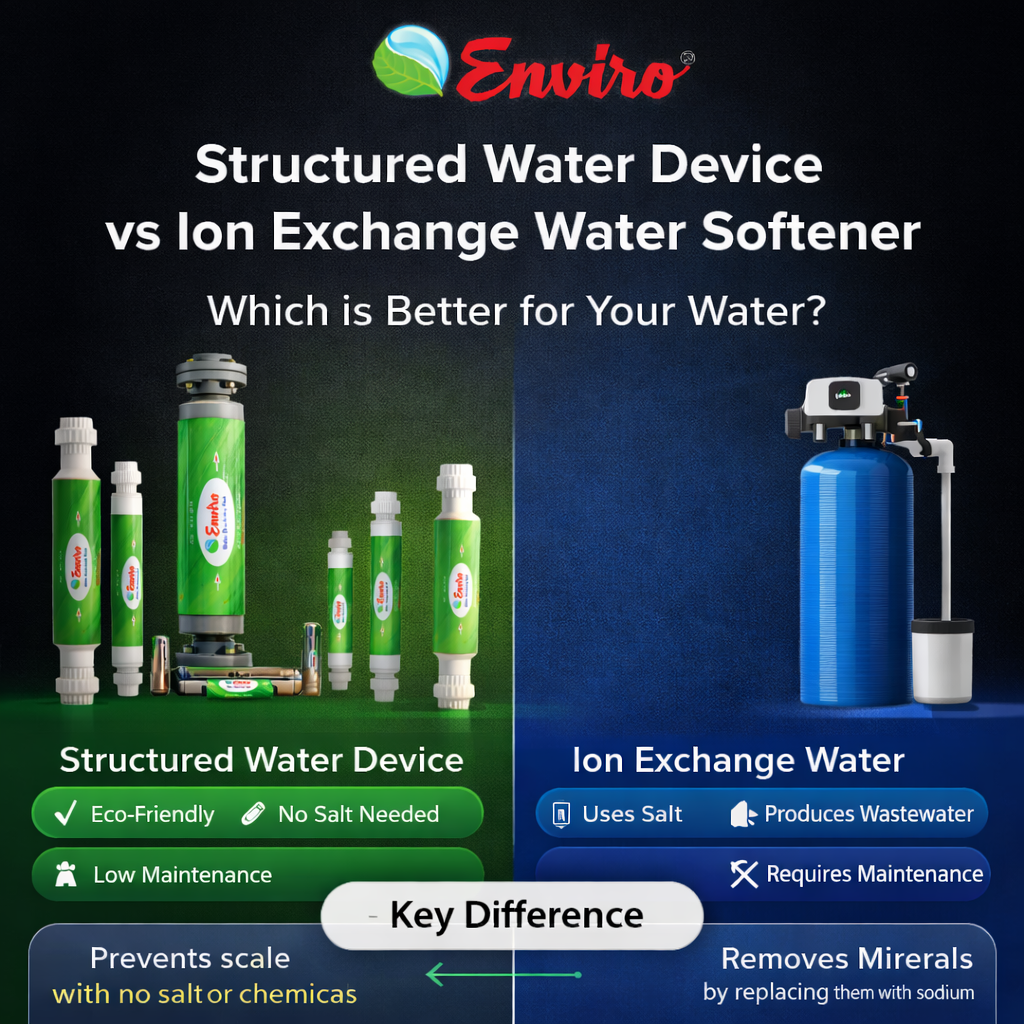
Structured Water Device vs Ion Exchange Water Softener – Which is Better for Your Water?
Water quality directly impacts your health, appliances, and overall lifestyle. One of the most common water issues is hard water, which leads to scaling, reduced efficiency of equipment, and higher maintenance costs. Choosing the right water treatment solution is essential for long-term performance and sustainability.
At Enviro, we believe in smart, efficient, and eco-friendly water solutions. In this blog, we help you understand the difference between a Structured Water Device and an Ion Exchange Water Softener, so you can make the right choice.
What is Hard Water?
Hard water contains high levels of calcium and magnesium minerals. While it is safe for consumption, it can cause several problems:
-
Scale buildup in pipelines and appliances
-
Reduced efficiency of water heaters and boilers
-
Increased energy consumption
-
Soap wastage and residue formation
This is why investing in the right water softening system is important.
Structured Water Device – Smart & Sustainable Solution
A Structured Water Device is an advanced and eco-friendly technology designed to prevent scaling without removing essential minerals.
How it Works
Water flows through a specially engineered internal structure that changes the behavior of hardness minerals. Instead of sticking to surfaces, these minerals remain suspended in water, reducing scale formation.
Key Benefits
-
No salt required
-
No chemicals used
-
No electricity consumption
-
Low maintenance
-
Environment-friendly solution
-
Retains natural minerals in water
Ion Exchange Water Softener – Traditional Method
An Ion Exchange Water Softener is a widely used system that removes hardness minerals from water.
How it Works
Water passes through resin beads that replace calcium and magnesium ions with sodium ions, effectively softening the water.
Key Benefits
-
Completely removes hardness
-
Provides soft water for washing and cleaning
-
Suitable for very high hardness levels
Limitations
-
Requires regular salt refilling
-
Needs periodic maintenance
-
Produces wastewater during regeneration
-
Adds sodium to water
Key Difference
A Structured Water Device changes the behavior of minerals to prevent scaling, while an Ion Exchange Water Softener removes those minerals completely by replacing them with sodium.
Which Water Treatment Solution is Right for You?
Choosing between these two depends on your requirement:
-
If you are looking for a low-maintenance, eco-friendly, and sustainable water treatment solution, a Structured Water Device is the ideal choice.
-
If you need completely soft water for specific applications, an Ion Exchange Water Softener may be suitable.
Why Choose Enviro?
At Enviro, we focus on delivering advanced water treatment solutions that are efficient, reliable, and environmentally responsible.
✔ Innovative technology
✔ Minimal maintenance
✔ Cost-effective solutions
✔ Designed for modern water challenges
Conclusion
Understanding the difference between a Structured Water Device and an Ion Exchange Water Softener helps you make an informed decision. While both systems solve hard water problems, the right choice depends on your priorities—sustainability, maintenance, and water usage needs.
Upgrade your water system with Enviro’s smart solutions and experience better water quality every day.