How Structured Water Devices Improve Water Quality
Water quality is essential for residential, commercial, and industrial applications. While conventional systems focus on filtration, structured water devices improve the natural behavior of water without using chemicals or electricity. This makes them a modern, eco-friendly solution in the water treatment industry.
What is Structured Water?
Structured water is water that has been reorganized at the molecular level into a more ordered and efficient form. In natural environments like rivers and streams, water maintains this structure due to constant movement and energy.
However, during storage and transportation through pipelines, water loses its natural structure due to pressure, stagnation, and chemical exposure. Structured water technology helps restore this balance.
How Structured Water Devices Work
Structured water devices use advanced internal designs to create vortex motion as water flows through them. This process mimics natural water movement, helping to restructure water molecules.
Unlike traditional filtration systems, these devices:
- Do not use chemicals
- Do not require electricity
- Do not remove dissolved minerals
Instead, they improve the physical properties of water, enhancing its overall performance.
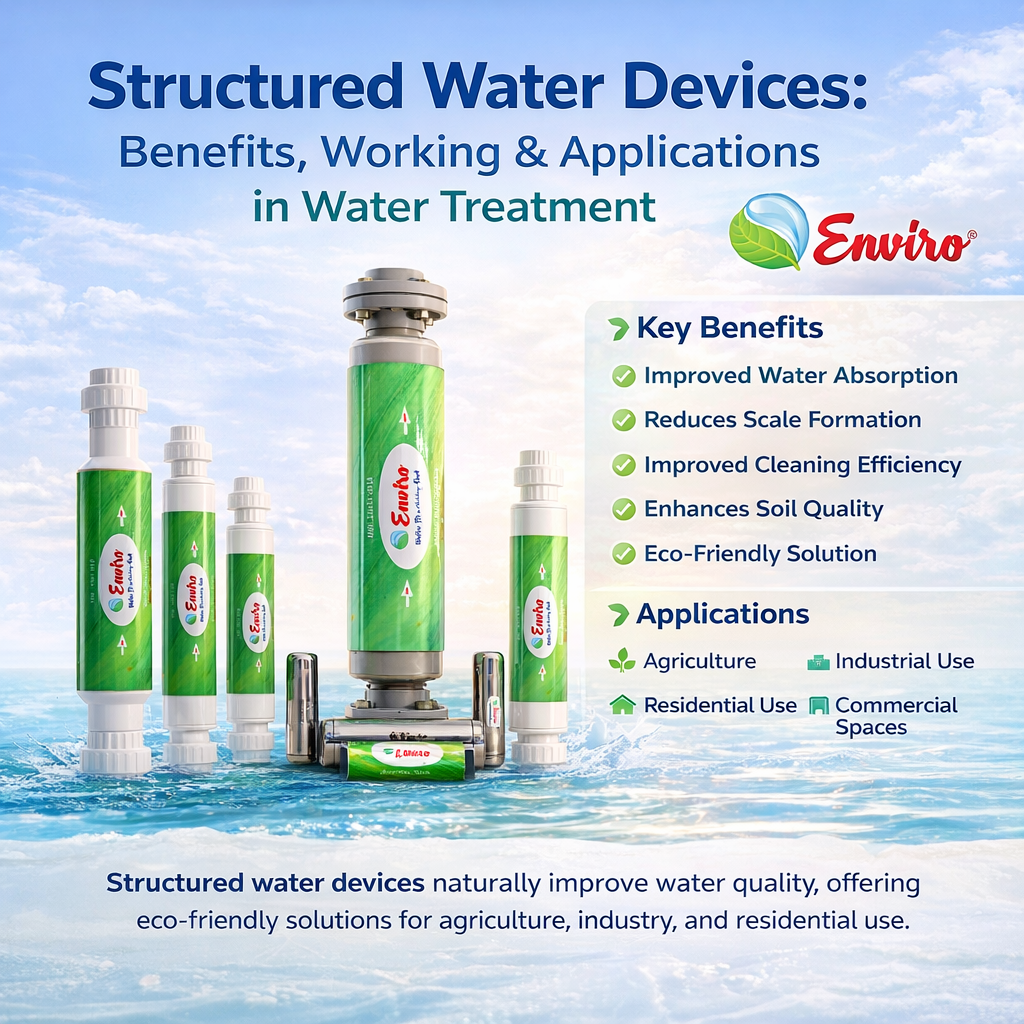
Key Benefits of Structured Water Devices
-
Improved Water Absorption
Structured water penetrates surfaces more effectively. In agriculture, this helps plants absorb water and nutrients efficiently, promoting healthier growth. -
Reduction in Scale Formation
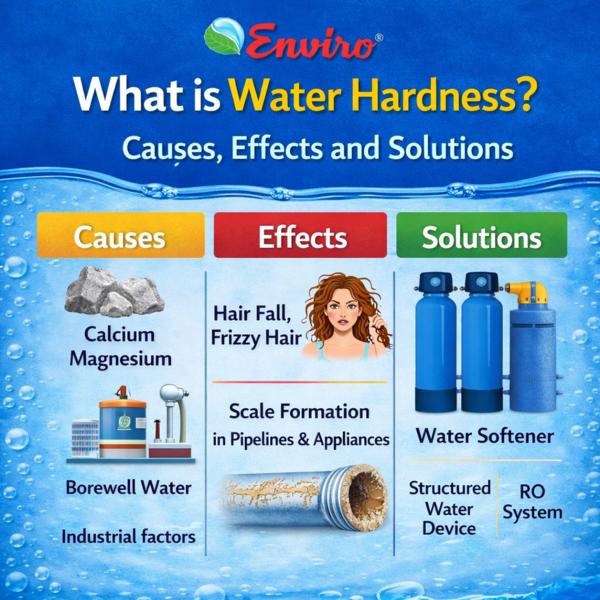
Structured water reduces scale buildup in pipelines and equipment by altering mineral behavior, preventing deposits. -
Better Cleaning Efficiency
Improves water interaction with surfaces, enhancing cleaning performance and reducing the need for chemicals. -
Enhanced Soil Quality
Boosts soil hydration and microbial activity, leading to improved crop yield and soil health. -
Eco-Friendly Solution
Operates without electricity or chemicals, making it a sustainable and cost-effective water treatment solution.
Applications of Structured Water Devices
Agriculture
Improves irrigation efficiency, enhances nutrient absorption, and increases crop productivity.
Industrial Use
Reduces scaling in boilers, cooling towers, and pipelines, improving system efficiency and lifespan.
Residential Use
Enhances water quality for everyday activities like bathing, washing, and cleaning.
Commercial Spaces
Used in hotels, hospitals, and offices to improve water performance and reduce maintenance costs.
Conclusion
Structured water devices are transforming modern water treatment by improving water quality naturally. With benefits like reduced scaling, better efficiency, and eco-friendly operation, they are becoming a preferred solution across industries.
As the demand for sustainable water solutions grows, structured water technology plays a key role in delivering efficient and long-term results.