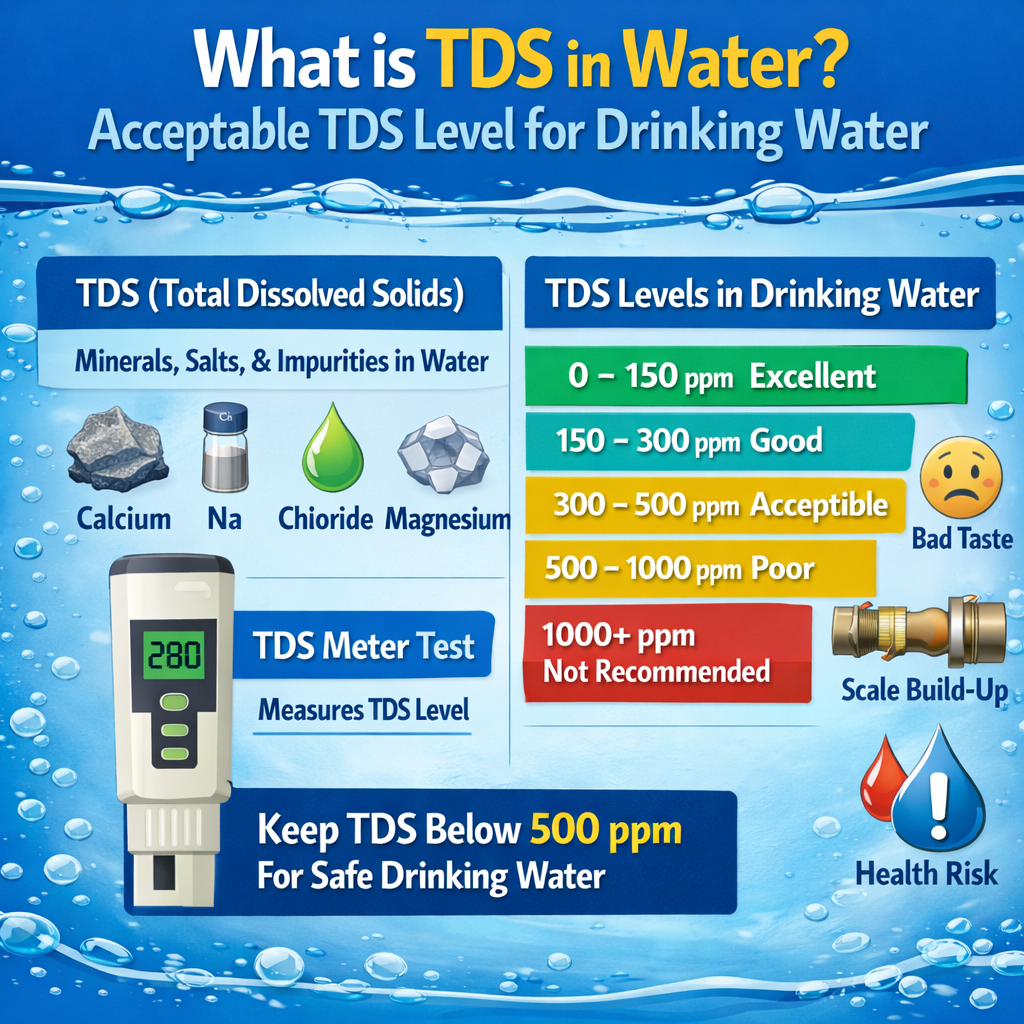
What is TDS in Water? Acceptable TDS Level for Drinking Water
Water quality is an important factor for health and daily use. One of the most common parameters used to measure water quality is TDS (Total Dissolved Solids). Many people notice this term when testing water with a TDS meter or when using a water purifier.
Understanding what TDS in water means and the acceptable TDS level for drinking water helps ensure that the water we consume is safe and suitable for health.
What is TDS in Water?
TDS (Total Dissolved Solids) refers to the total amount of dissolved substances present in water. These substances include minerals, salts, metals, and other inorganic compounds that dissolve in water.
Common dissolved solids found in water include:
-
Calcium
-
Magnesium
-
Sodium
-
Potassium
-
Chlorides
-
Sulfates
-
Bicarbonates
These substances naturally enter water through soil, rocks, groundwater sources, and human activities.
TDS is usually measured in parts per million (ppm) or milligrams per liter (mg/L).
What Causes TDS in Water?
Several factors contribute to the presence of dissolved solids in water.
1. Natural Minerals in Soil and Rocks
As water flows through soil and underground rock layers, it dissolves minerals such as calcium and magnesium, which increase TDS levels.
2. Groundwater Sources
Borewell water and groundwater often have higher TDS levels because they remain in contact with minerals for long periods.
3. Agricultural Runoff
Fertilizers and chemicals used in agriculture may dissolve in water and increase the TDS content.
4. Industrial Discharge
Industrial activities may release dissolved chemicals and salts into water sources.
Acceptable TDS Level for Drinking Water
The acceptable TDS level in drinking water depends on international and national water quality standards.
According to common guidelines:
TDS Level (ppm) | Water Quality |
|---|---|
| 50 – 150 ppm | Excellent |
| 150 – 300 ppm | Good |
| 300 – 500 ppm | Acceptable |
| 500 – 1000 ppm | Poor but usable |
| Above 1000 ppm | Not recommended for drinking |
Generally, drinking water with TDS below 500 ppm is considered safe.
Water with very high TDS may have unpleasant taste, odor, and scaling problems.
Effects of High TDS in Water
High TDS levels in water can create several problems.
1. Bad Taste
Water with high dissolved solids often tastes salty, bitter, or metallic.
2. Scaling in Pipes and Appliances
High mineral content can cause scale formation in pipes, heaters, kettles, and plumbing systems.
3. Reduced Efficiency of Appliances
Scaling reduces the efficiency of water heaters, boilers, and washing machines.
4. Possible Health Concerns
Very high TDS levels may indicate the presence of excess minerals or contaminants, which may not be suitable for long-term consumption.
How to Measure TDS in Water
TDS can be measured using a TDS meter, a small handheld device commonly used in water testing.
The device measures the electrical conductivity of water and displays the TDS value in ppm.
TDS testing is widely used in:
-
Water purification systems
-
RO plants
-
Aquariums
-
Drinking water quality testing
How to Reduce TDS in Water
If water contains high TDS levels, several treatment methods can be used.
1. Reverse Osmosis (RO)
Reverse Osmosis is one of the most effective methods for reducing TDS. An RO membrane removes dissolved salts, minerals, and impurities from water.
2. Distillation
This process involves boiling water and collecting the condensed steam, leaving dissolved solids behind.
3. Deionization
Deionization systems remove charged mineral ions from water using ion-exchange resins.
Among these methods, RO water purification systems are the most commonly used solution for domestic and industrial water treatment.
Importance of Maintaining Proper TDS Levels
Maintaining the correct TDS level in water is important for both health and equipment protection.
Benefits of proper TDS levels include:
-
Better tasting drinking water
-
Reduced scaling in pipes and appliances
-
Improved water quality for domestic and industrial use
-
Longer life of plumbing and water systems
Water treatment systems such as RO plants, filtration systems, and water conditioners help maintain optimal water quality.
Conclusion
TDS is an important indicator of water quality that represents the total amount of dissolved minerals and substances present in water. Maintaining the appropriate TDS level ensures that drinking water remains safe, clean, and suitable for daily use.
If the TDS level in water is too high, water treatment methods such as reverse osmosis and filtration systems can effectively reduce dissolved solids and improve water quality.