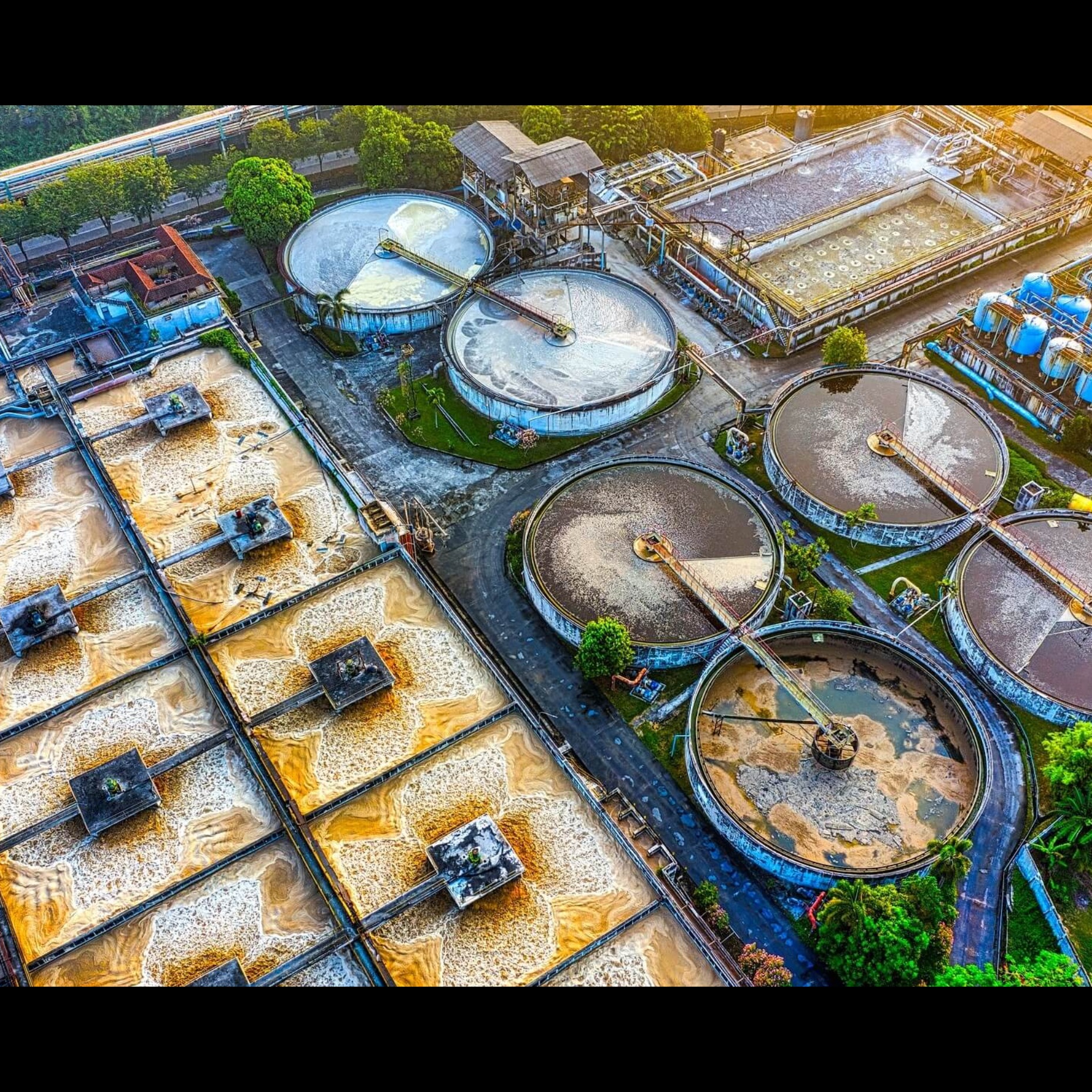
Effluent Water Treatment Plant (ETP)
Main Objectives of an ETP:
Remove toxic and non-toxic pollutants
-
Protect the environment and water bodies
-
Enable safe discharge or reuse of treated water
-
Comply with environmental regulations
Basic Stages of an Effluent Treatment Plant:
Preliminary Treatment – Removal of large solids, oil, and grease
-
Primary Treatment – Chemical treatment to remove suspended solids
-
Secondary Treatment – Biological process to remove organic matter
-
Tertiary Treatment – Advanced filtration and disinfection for reuse
-
Sludge Treatment – Handling and disposal of generated sludge
Importance of ETP
Reduces water pollution
-
Saves water through recycling
-
Essential for sustainable industrial operations
Importance of Effluent Treatment Plant (ETP)
Environmental Protection: Prevents harmful chemicals and pollutants from contaminating rivers, soil, and groundwater.
-
Regulatory Compliance: Helps industries meet pollution control board and environmental norms.
-
Water Conservation: Enables reuse and recycling of treated water, reducing fresh water consumption.
-
Public Health Safety: Minimizes health risks caused by toxic and untreated wastewater.
-
Sustainable Industrial Growth: Supports eco-friendly and responsible industrial operations.