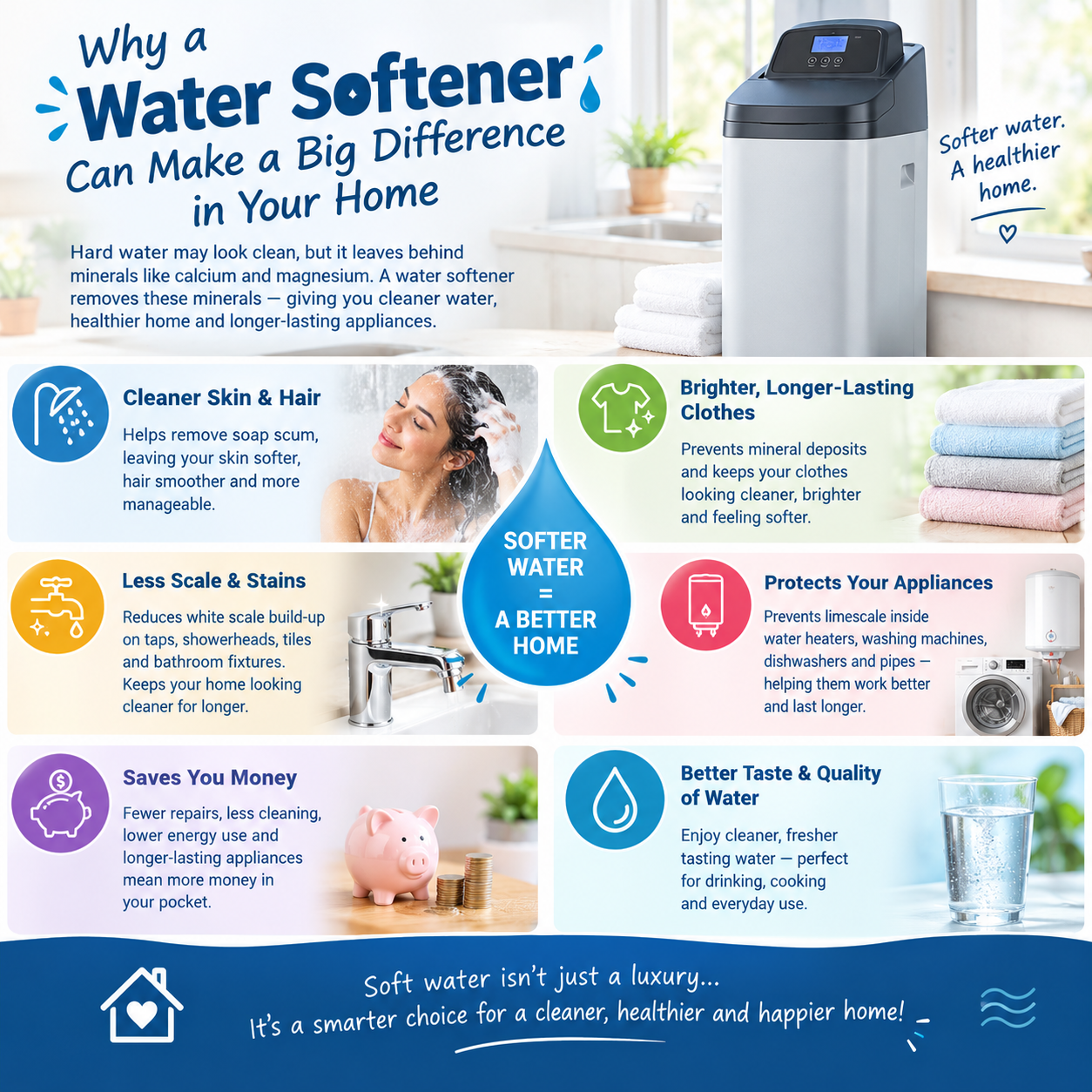
Have you ever noticed white marks on your taps, a rough feeling on your skin after a shower, or that your soap doesn’t seem to produce much foam? If so, hard water could be the reason.
Hard water is common in many homes.
It contains minerals such as calcium and magnesium, which are not usually
harmful to drink, but they can create problems for your plumbing, appliances,
skin, hair, and everyday cleaning.
This is where a water softener can help.
What Is Hard Water?
Hard water is simply water that
contains a high amount of dissolved minerals, mainly calcium and magnesium.
You may not notice the minerals when
you first turn on the tap, but their effects can see over time. You might see a
chalky layer around taps, spots on glassware, or scale building up inside
appliances.
For many families, hard water becomes
one of those small household problems that gradually turns into a bigger
inconvenience.
How Does a Water
Softener Work?
A water softener is designed to
reduce the minerals responsible for water hardness.
Most traditional water softeners use
a process called ion exchange. As hard water passes through the
softener, calcium and magnesium ions are exchanged for sodium or potassium
ions. The treated water then flows into your home with less hardness-causing
minerals.
The result is water that feels
noticeably different during everyday activities such as bathing, washing
clothes, and cleaning.