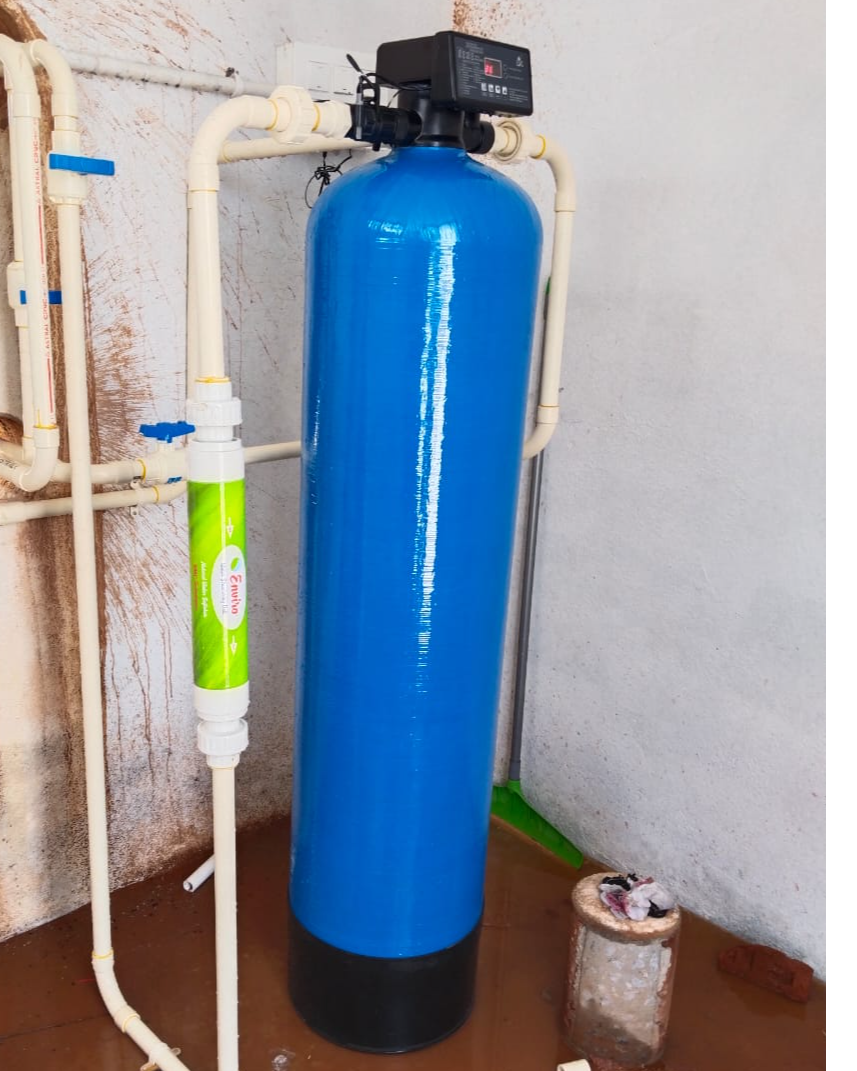
what is resinbased
softener?
A resin-based softener typically refers
to a water softener that uses ion exchange resin to remove
hardness-causing minerals—mainly calcium (Ca²⁺) and magnesium (Mg²⁺)—from
water.
How It Works:
·
The resin is made of tiny beads
(usually made of polystyrene sulfonate) that are charged with sodium (Na⁺)
or sometimes potassium (K⁺) ions.
·
As hard water flows through the resin bed, the
calcium and magnesium ions in the water are attracted to and held by the
resin, while sodium or potassium ions are released into the water in
exchange.
·
Over time, the resin becomes saturated with
calcium and magnesium, and must be regenerated by flushing it with a brine
solution (high concentration of salt) to restore its sodium/potassium
content.
Common Uses:
- Household water softeners (for
plumbing, appliances, and bathing comfort)
- Industrial and commercial systems (boilers, cooling systems, laundries)
· Certainly! Here’s a deeper dive into resin-based water softeners, covering their components, types of resins, regeneration cycles, advantages, limitations, and alternatives.
Main
Components of a Resin-Based Softener:
· Mineral Tank (Resin
Tank)
- Contains the ion-exchange resin beads.
- Water enters here for softening.
· Control Valve
- Controls the flow of water through the system.
- Manages the regeneration cycle based on time or usage.
· Brine Tank
- Holds the salt or potassium solution used for regeneration.
- Feeds brine to the resin tank during the recharge cycle.
Types of
Ion Exchange Resins:
- Cation Exchange Resin (most common)
- Removes positively charged ions like Ca²⁺ and Mg²⁺.
- Typically regenerated with sodium chloride (NaCl) or potassium
chloride (KCl).
- Anion Exchange Resin
- Removes negatively charged ions (like nitrate, sulfate, etc.).
- Less common in household softeners, more common in water
purification or deionization systems.
- Mixed Bed Resin
- A mix of cation and anion resins.
- Used in high-purity water systems (like in labs or electronics manufacturing).
Regeneration Cycle:
A typical regeneration cycle includes:
- Backwash: Loosens and cleans the resin bed.
- Brine Draw:
Brine solution is drawn from the tank and passed through the resin to
replace calcium/magnesium with sodium.
- Slow Rinse:
Flushes out calcium, magnesium, and excess brine.
- Fast Rinse:
Final clean water rinse.
- Refill: Replenishes the brine tank with water for the next cycle.
Regeneration can be:
- Time-based
(e.g., every 3 days)
- Metered/demand-based
(e.g., after a set volume of water is used)
Advantages
of Resin-Based Softeners:
- Highly effective at
removing water hardness.
- Extend appliance life and
improve energy efficiency.
- Reduce soap and detergent usage.
- Improve water taste and skin feel.
Limitations:
- Adds sodium to
softened water (important for people on low-sodium diets).
- Requires regular salt refilling and maintenance.
- Doesn't remove other contaminants
(e.g., bacteria, iron, chlorine).
- Wastewater generation
during regeneration.
Alternatives:
- Salt-Free Water Conditioners
- Use template-assisted crystallization (TAC) to alter mineral
structure.
- Don’t remove hardness but prevent scale buildup.
- No salt, no wastewater.
Reverse Osmosis (RO) Systems
- Remove a wide range of contaminants including hardness.
- Lower flow rates, best for drinking/cooking water.
· Magnetic/Electronic
Descalers
- Claim to reduce scale by altering mineral behavior.
- Limited scientific backing.
Conclusion
Resins are employed extensively in a variety of separation, purification, and decontamination processes. In many cases, ion-exchange resins were used as a more flexible alternative to natural or artificial zeolites in such operations.